Colombian Tennis Player Cristian Rodríguez Detained in Brazil for Alleged Racist Gestures
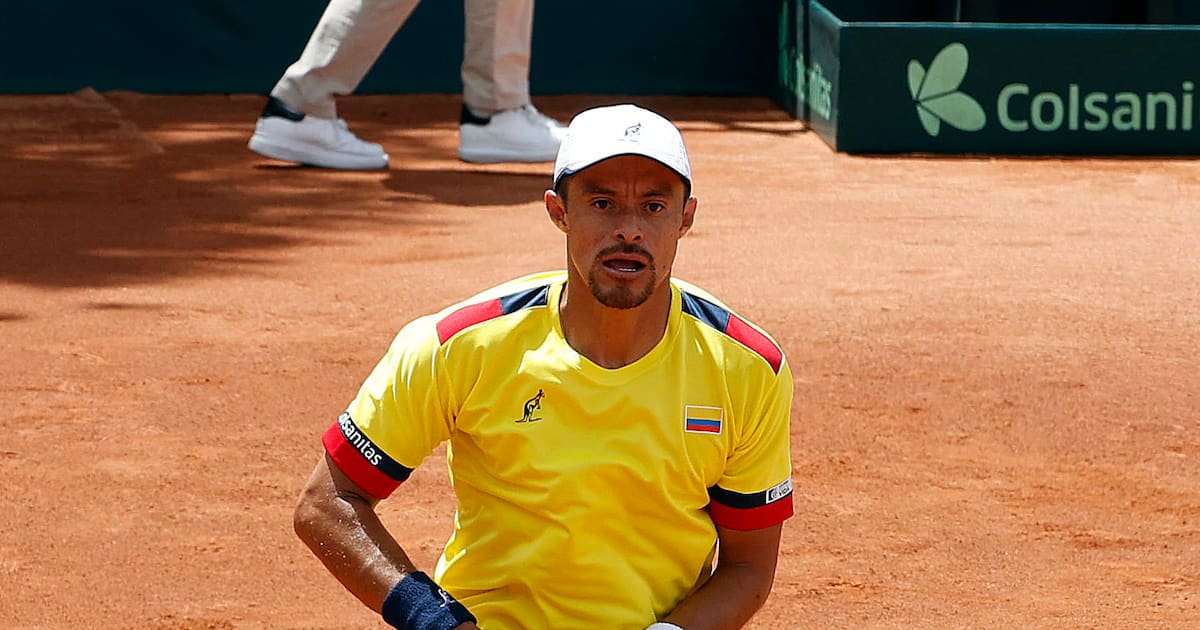
Colombian Tennis Player Cristian Rodríguez Detained in Brazil for Alleged Racist Gestures opposition Opposition outlets portray Rodríguez’s detention as a serious scandal that gravely tarnishes Colombia’s sporting reputation and exposes slow or inadequate reactions from tennis authorities and the government. They emphasize the severity of Brazil’s anti-racism penalties and highlight official silence as symptomatic of broader institutional weakness. @El Universal @El Colombiano Colombian tennis player Cristian Rodríguez was detained in Itajaí, Brazil, following an incident after a doubles match at the Challenger de Itajaí tournament in which he and his partner, Venezuelan Luis David Martínez, were eliminated in the quarterfinals by a Brazilian pair. Opposition-aligned outlets concur that Brazilian authorities accuse Rodríguez and Martínez of having made racist or racially offensive gestures and slurs toward members of the local crowd, and that both players were taken into custody and transferred to a local prison. These reports highlight that the investigation is being handled under Brazil’s racial slur or racist insult provisions, which foresee possible prison terms in the range of approximately two to five years if guilt is established.
Coverage also agrees that the matter is still under investigation and no court has yet determined the players’ legal responsibility, leaving the presumption of innocence formally intact despite the seriousness of the accusations. The shared context emphasizes that the case unfolds within Brazil’s strict anti-racism legal framework and in the professional tennis circuit’s disciplinary environment, where governing bodies can impose sanctions in parallel to criminal proceedings. All reports note that the Colombian Tennis Federation has not yet issued an official statement, underscoring an institutional vacuum while the Brazilian justice system and tournament organizers gather evidence from witnesses, crowd footage, and tournament security records.
Points of Contention
Framing of the incident. Opposition-aligned coverage tends to foreground the word “scandal” and dramatize the arrest as a humiliating episode for Colombian sport, often leading with the detention and possible jail time rather than the presumption of innocence. Government-aligned narratives, where they appear through official or semi-official comments and syndications, tend to describe the matter more neutrally as an ongoing inquiry into alleged racist conduct. The former stresses the shock value and reputational damage to highlight disorder or embarrassment abroad, while the latter gives more procedural language that situates it as part of Brazil’s normal enforcement of anti-racism laws.
Legal emphasis and penalties. Opposition sources repeatedly underscore that Rodríguez and Martínez could face between two and five years in prison, using this range to stress the gravity of the charges and the potential for an international legal embarrassment. Government-aligned messaging, by contrast, tends to mention possible penalties more briefly, stressing that an investigation must first establish facts and that defense arguments and diplomatic support mechanisms exist for Colombian citizens abroad. Where opposition coverage uses the sentencing range to dramatize risk and urgency, government-adjacent discourse frames it as a maximum statutory horizon subject to due process and possible mitigation.
Institutional responsibility. Opposition media emphasize the silence of the Colombian Tennis Federation and, by extension, question the responsiveness of sports authorities and foreign service officials who might provide legal or consular support. Government-aligned voices more often present the federation’s and government’s caution as responsible restraint, arguing that official statements should wait for verified information from Brazilian authorities. Thus, opposition coverage frames institutional quiet as neglect or incompetence, while government-linked outlets frame it as respect for legal processes and avoidance of premature judgments.
Impact on national image. Opposition outlets highlight the incident as yet another blow to Colombia’s international image, tying it implicitly to broader narratives of poor representation abroad and weak oversight of elite athletes. Government-aligned coverage, when addressing image at all, tends to dissociate the alleged behavior from the country as a whole, suggesting it is a case of individual conduct that should not be generalized to national character or policy. As a result, opposition sources leverage the case to critique broader reputational management, whereas government-aligned narratives downplay its systemic significance and present it as an isolated judicial matter.
In summary, opposition coverage tends to dramatize the arrest, spotlight potential prison time, and use institutional silence to question broader government and sports governance failures, while government-aligned coverage tends to downplay sensational elements, emphasize due process and individual responsibility, and treat the case as a contained legal issue rather than a national scandal. Story coverage
Write a comment