From Mississippi Boy to Virginia Gentleman
Crew of the USS Tom Clancy,
Thank you so much for reading!
This dispatch is a follow on to a longer series on Frank Wisner and his effect on American culture—if you missed this dispatch:
You may want to read it before reading this one.
I hope spring is treating you well.
Matt
The Education of Frank Wisner• • The Woodberry Forest School sits along a bucolic bend of the Rapidan River in Orange, Virginia. This was once the estate of William Madison, brother of American President James Madison.The headmaster’s house was designed by Thomas Jefferson and was later fashioned into a school for southern gentleman by a former Confederate officer, Captain Robert Stringfeller Walker. Walker rode with Mosby’s Rangers, a guerrilla detachment of Virginia Cavalry that was among the last Confederate units to disband, and only after the Army of Northern Virginia surrendered to US Grant at Appomattox. Mosby’s Rangers included child soldiers as young as 16.
• • The Woodberry Forest SchoolAs recently as 2015, the Central Intelligence Agency sent officers on a “staff ride” to learn the lessons of Mosby’s partisan warfare; (https://www.cia.gov/readingroom/docs/MOSBYS%20RANGERS%20%20LESSONS%20I%5B14652257%5D.pdf) the staff ride handbook notes that “In World War II, the Office of Strategic Services studies Mosby and his methods, and his tactics and lessons learned remain a current focus of research and study by US Special Forces and Special Operations Forces.
• • After the Civil War, when he worked as a lawyer for the Southern Pacific Railroad in California Colonel Mosby mentored a young man named George Patton in horsemanship and cavalry tactics; Patton would grow into a general who would—like Mosby—wear ivory handled Colt Revolvers leading the Third Army in World War II. Winston Churchill wrote in “The River War” he was also influenced as a Cavalryman by Mosby’s use of pistols in Cavalry raids, charging a Dervish line in Anglo-Egyptian Sudan with a German Mauser pistol.
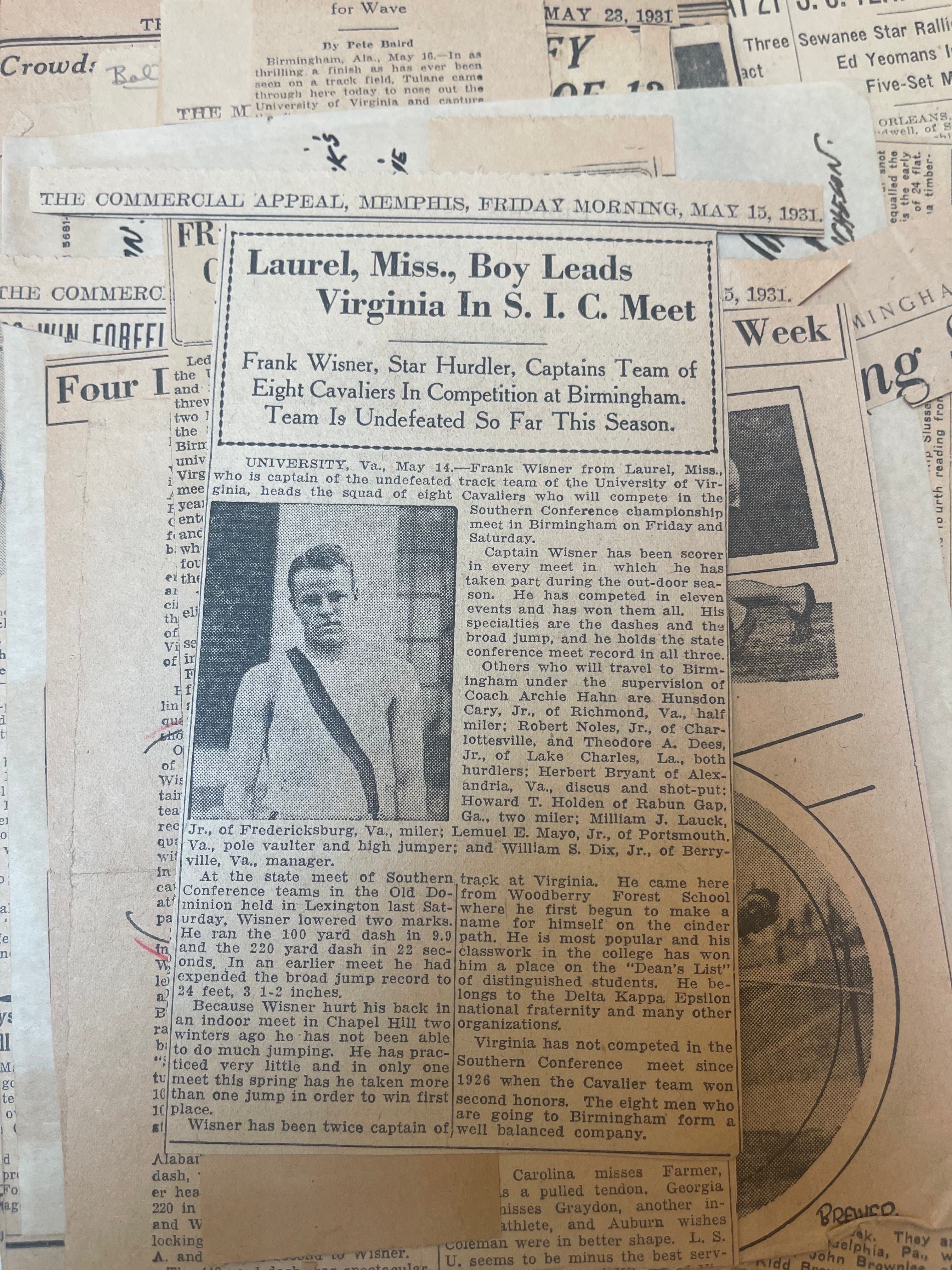
Wisner was educated at a school founded by influential veterans of covert action in the Confederate Model. The Woodberry Forest school, a legacy of Mosby’s Rangers, would be a critical first medium for Wisner’s growth; it was there that Wisner first met Gordon Gray, the tobacco company heir. Gray, as Secretary of the Army under Truman, would order West Point to swap out the portrait of Colonel Robert E. Lee in United States Army blue for a portrait of General Robert E. Lee in Confederate Army gray that would remain in the dining hall—where West Point cadets take three meals a day—until the Obama administration. As National Security Adviser he would advise Wisner to enter a six-month course of inpatient treatment at The Sheppard Pratt Institute in Baltimore, while co-owning an Orchid shop favored by James Angleton.
After Woodberry Forest, Wisner enrolled at UVA in 1927. The University of Virginia that Frank Wisner attended in the late 1920’s and early 1930’s was a starkly different institution than its current incarnation. One metric alone—enrollment—demonstrates this. When Wisner was an undergraduate in 1929 there were 2,200 students. As of 2024, there were 25,944 students at the University of Virginia. The school was nearly all male—women were admitted to graduate and professional schools—nearly all white, mostly southern, mostly rich, clad in coat and tie, among them the grandsons and great grandsons of the Confederacy’s most prominent citizens.
The President of the school when Wisner arrived was Edwin Alderman, who wrote the Ku Klux Klan a public thank-you in the University newspaper after the local Klavern donated money for the construction of Memorial Gym—the ‘Memorial’ in the name was for the Civil War.1 (#footnote-1) By the 1920’s and 1930’s the University of Virginia was a world-wide leader in the field of eugenics, and the school would be criticized in years immediately following Wisner’s graduation by the New York Times for nearly sending a delegate to a celebration of the University of Heidelberg in Nazi Germany in 1936. The Richmond Times Dispatch declared in print that President John Lloyd Newcomb (who became President in 1931, the same year Wisner enrolled in Law School) should refuse the invitation “in such unmistakable terms the whole world will listen” (Norwood, 145).
To read this dispatch and the hundred and fifty dispatches in the archives (they’re great and worth the price of admission) subscribe today. Your subscriptions mean this work continues.
          Read more
       (https://thehuntfortomclancy.substack.com/p/from-mississippi-boy-to-virginia)
Write a comment