The Long Politics of Rudyard Kipling's "Kim"
• • Crew of the USS Tom Clancy, I hope this is a lovely Christmas Eve for you; thank you so much for reading and subscribing. While doing my research into Frank Wisner I got interested in how he’d been influenced by Rudyard Kipling’s novel Kim. I thought the topic worth a closer examination and hope you enjoy it. Merry Christmas, Happy New Year, Happy Holidays. If you need a last minute gift Idea, consider giving that hard to shop for person a subscription to “The Hunt for Tom Clancy” Share Matt
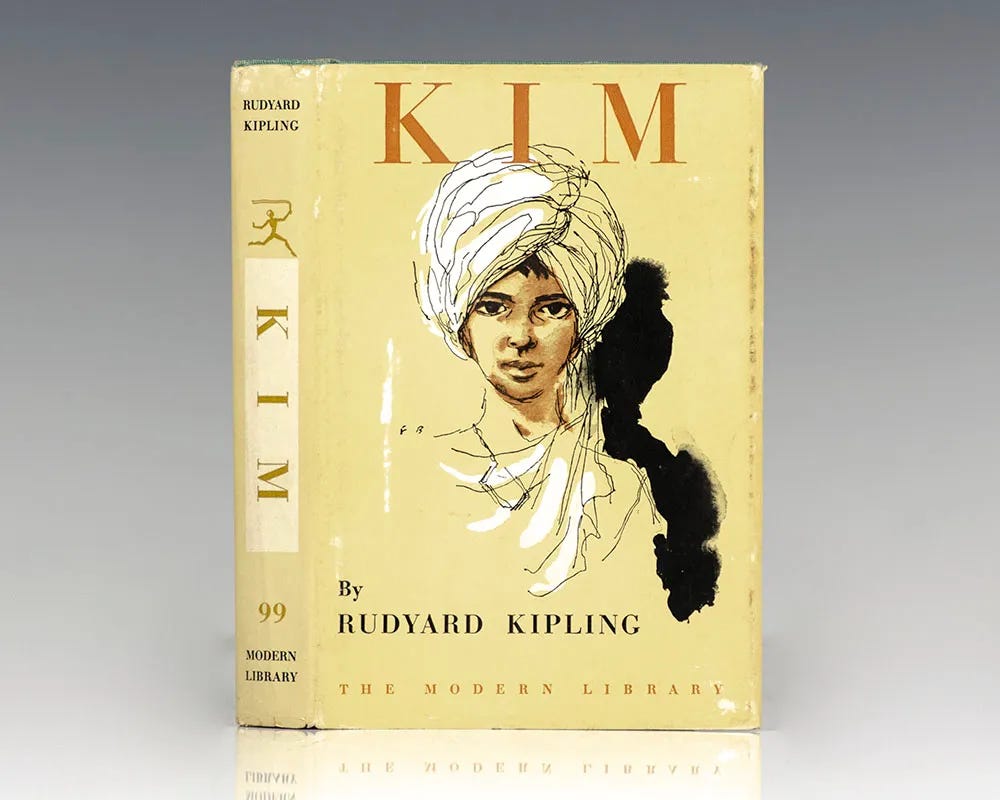
Virginia Woolf’s husband Leonard—a British Imperial cadet in the Ceylon Civil Service and later an administrator of the Hambantota District —once said, after a posting in Ceylon, “I could later never make up my mind whether [Rudyard] Kipling had moulded his characters accurately in the image of Anglo-Indian society or whether we were moulding our characters accurately in the image of a Kipling story.” University of Washington English Professor Jesse Oak Taylor further notes that “Kipling’s work holds out the possibility not only to depict, but also to create the empire and the men who ruled it.” (Taylor, ELT 52;1) The novel’s possibility to create the empire and the men who ruled it outlived the British empire. After World War II, Kim was very popular with a set of senior American intelligence officials. First Deputy Director (Plans), then Director of Central Intelligence Allen Dulles kept a well-thumbed copy of Kim on his desk at CIA. Office of Policy Coordination Director and Deputy Director (Plans) Frank Wisner read it to his children. One of those children, Frank Wisner Jr, would go on to be the American ambassador to India; later he would be President Barack Obama’s Special Envoy to Egypt during the Arab spring. Trinity College Professor Vijay Prashad, a Marxist historian, called Wisner Jr. “The Empire’s Bagman,” in a Counterpunch article and on the television program Democracy Now. “Frank Wisner, Jr., is seasoned State Department official, a very close friend of Mubarak, a man more committed to stability than democracy, and, yes, an employee at Patton Boggs,[1] where one of the portfolios is for Patton Boggs to lobby on behalf of the government of Egypt,” noted Prashad. There is significance to this book’s long influence over the minds of those who exercised control over the American power (soft and hard) that rose to take the place of the declining British empire. The novel extracts, creates, and exerts its own politics, according to the definition of politics provided by Jacques Rancière. • • Thank you for reading “The Hunt for Tom Clancy” to read the rest of this dispatch and access the archives which contain dozens of dispatches please become a paid subscriber
          Read more
       (https://thehuntfortomclancy.substack.com/p/the-long-politics-of-rudyard-kiplings)
Write a comment