Venezuelan Opposition Members, Including Juan Pablo Guanipa, Released From Prison
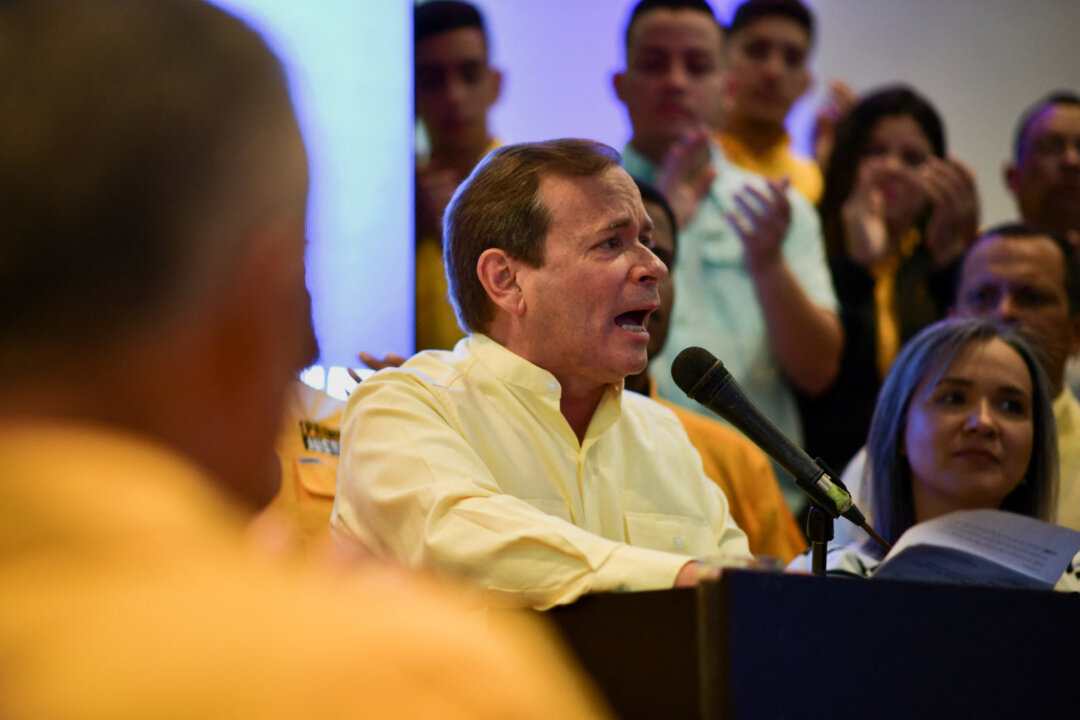
Venezuelan Opposition Members, Including Juan Pablo Guanipa, Released From Prison conservative Conservative coverage emphasizes that freeing Juan Pablo Guanipa and other opposition figures validates a hard-line, sanctions-based approach toward the Maduro government, portraying the releases as a direct response to U.S. and international pressure. It presents the episode as part of a broader ideological struggle against leftist authoritarianism and argues that pressure must be sustained or increased to secure meaningful democratic change. @The Epoch Times @The Washington Times Venezuelan authorities have released several high-profile opposition figures, including Juan Pablo Guanipa, Freddy Superlano, and lawyer Perkins Rocha, after months in detention. Rights group Foro Penal has reported that roughly 35 political prisoners were freed on a single Sunday as part of a broader wave of releases, which both liberal and conservative sources link to ongoing pressure from the United States for the government to free detainees. Coverage across the spectrum notes that Guanipa had been held for over eight months, that the accusations against him and others were widely viewed as politically motivated, and that their releases form part of a series of high-visibility moves by President Nicolás Maduro’s government involving jailed opponents.
Liberal and conservative outlets alike place these events within the longer arc of Venezuela’s political crisis, marked by years of confrontation between the Maduro government and an opposition that has faced arrests, disqualifications, and exile. Shared context emphasizes the role of international mediation efforts, including U.S. sanctions and diplomatic bargaining, as key levers behind recent prisoner releases, alongside broader concerns about human rights and democratic backsliding in Venezuela. Both sides frame the opposition figures as part of a larger group of prisoners of conscience or politically targeted actors, and they agree that the releases, while significant, do not on their own resolve structural issues such as judicial independence, electoral fairness, and the government’s pattern of repressing dissent.
Points of Contention
Motives behind the releases. Liberal-aligned coverage tends to portray the releases as a tactical concession by Maduro’s government in response to sustained international pressure and domestic legitimacy concerns, emphasizing that they are meant to ease sanctions or improve Venezuela’s image without fundamental change. Conservative outlets more often frame the move as a direct response to firm U.S. pressure and a vindication of a tougher line on Caracas, stressing that only credible external leverage forced Maduro’s hand. While liberals highlight the need for broader institutional reforms beyond prisoner releases, conservatives underline that continued or increased pressure is necessary to prevent the government from backsliding.
Characterization of the opposition figures. Liberal sources typically highlight Guanipa, Superlano, and others as emblematic victims of authoritarian repression, focusing on their roles within the democratic opposition and the political nature of the charges against them. Conservative coverage also describes them as political prisoners but tends to stress their alignment with pro-market, anti-socialist platforms and portrays their persecution as part of a wider regional struggle against leftist authoritarianism. Liberals frame their release mainly as a human-rights and rule-of-law issue, whereas conservatives more often cast it as a win for anti-socialist forces and for U.S.-led pressure.
Assessment of U.S. policy. Liberal-aligned reporting often presents U.S. involvement as part of a multilateral diplomatic strategy, sometimes questioning whether broad sanctions exacerbate humanitarian suffering even as they pressure Caracas. Conservative outlets are more likely to argue that strong sanctions and clear red lines are precisely what produced results, pointing to the timing of the releases as evidence that a hard line works. Liberals tend to call for calibrated engagement tied to democratic benchmarks, while conservatives generally advocate maintaining or tightening pressure until deeper political changes occur.
Implications for Venezuela’s political future. Liberal coverage frequently cautions that, although meaningful, the releases are only a first step and that free elections, restoration of political rights, and an end to arbitrary detentions are the real tests of progress. Conservative coverage, while similarly skeptical about Maduro’s intentions, more often frames the releases as a tactical move to buy time or divide the opposition, warning that the regime is unlikely to permit genuinely competitive elections without ongoing pressure. Liberals emphasize the importance of inclusive negotiations and institutional reforms, whereas conservatives stress regime change dynamics and the need to keep leverage on the government.
In summary, liberal coverage tends to treat the prisoner releases as a limited but important rights-based concession that must be followed by deeper institutional and electoral reforms, while conservative coverage tends to frame them as proof that firm, especially U.S.-led, pressure on a socialist regime can yield concrete results but should not be relaxed until broader political change is secured. Story coverage
Write a comment