American Volunteer Nate Vance Comments on Russian Military Tactics in Ukraine
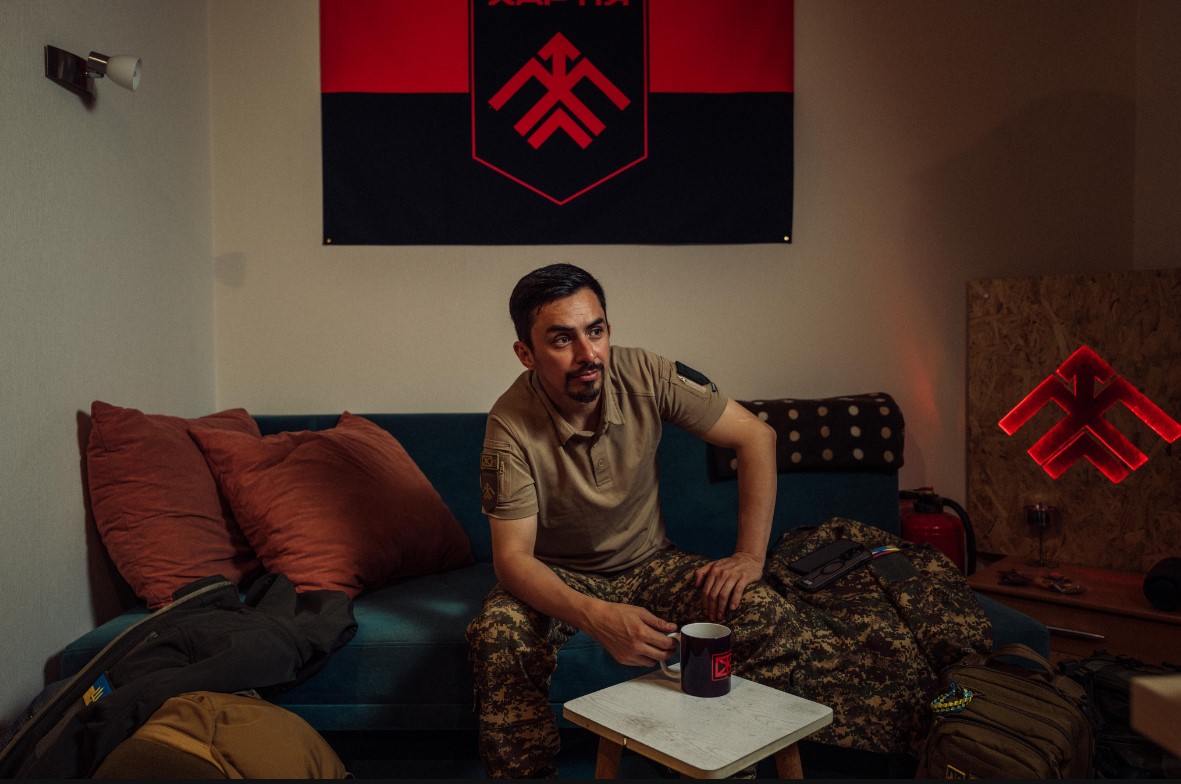
American Volunteer Nate Vance Comments on Russian Military Tactics in Ukraine Russian artillery is thundering in Ukraine, but an American volunteer with a famous last name says the empire of steel looks more like a rusting machine than an unstoppable war juggernaut.
On the ground: firepower vs. finesse
From the trenches, Nate Vance — U.S. Marine veteran, foreign volunteer in the Ukrainian Armed Forces, and cousin to U.S. Vice President JD Vance — draws a sharp contrast between Russian hardware and Russian tactics. Russians “have a lot of artillery and drones” but “don’t know how to storm,” he says, encapsulating a battlefield where barrages are plentiful but successful assaults are not.
Vance argues that Moscow’s entire force structure was built for massive armored offensives in Europe — the very thing he now considers beyond their reach. When he left Ukraine in 2025, “it was already quite noticeable that Russia’s combat capability was decreasing,” with heavy equipment used “noticeably less often,” and Russia “simply incapable of conducting large armored offensives in Europe.”
Strategy and doctrine: stuck in the 1980s
Where Russian propagandists project modernization, Vance sees stagnation. “Tactically Russia is stuck in the 1980s,” he argues, claiming that after the Soviet collapse, Moscow “never moved forward in terms of military doctrine.” The 2022 invasion looked like an “1980s-style” operation — massed armor, long supply lines — in a world of precision weapons and real-time surveillance, a mismatch that made concentrated armor “too easy to destroy.”
The bigger fight: aid, intervention, and the Vance surname
In Washington, JD Vance has made a career out of skepticism toward deep U.S. entanglement abroad, while Nate Vance calls for a far more aggressive Western posture — including hitting Russian oil refineries and leveraging superior NATO air power to break the stalemate. The two Vances embody a broader split: one wing of American politics arguing to hold back, the other insisting that Russia’s vulnerabilities are an opportunity to press harder.
1. The Insider
“Russians have a lot of artillery and drones, but they don’t know how to storm. Confessions of foreign volunteers fighting for Ukraine”
2. The Insider
“When I left Ukraine this year, it was already quite noticeable that Russia’s combat capability was decreasing… They are simply incapable of conducting large armored offensives in Europe. And this is bad for Russia, because the entire structure of their army was initially built for this. Tactically Russia is stuck in the 1980s.”
Write a comment