U.S. Air Force B-52 Bomber Crashes at Edwards Air Force Base, Killing Eight
- What Happened
- The Opposition Lens: Tragedy and Risk
- The Government Lens: Capability and Continuity
- Shared Ground, Diverging Emphasis
U.S. Air Force B-52 Bomber Crashes at Edwards Air Force Base, Killing Eight A Cold War-era giant has fallen out of the sky over California, and with it eight lives—instantly weaponizing a tragic test-flight crash into a fresh proxy battle over U.S. power and risk.
What Happened
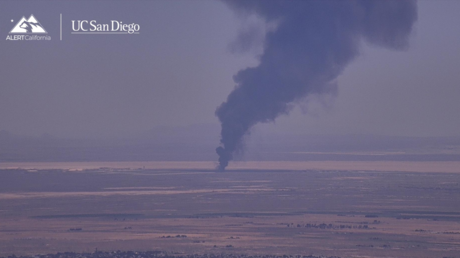
Both sides agree on the basics: a U.S. Air Force B-52 Stratofortress crashed shortly after takeoff at Edwards Air Force Base in the Mojave Desert during a planned test mission, killing all eight people on board and destroying the aircraft in a post-impact fire.
Flights were halted and the airfield locked down as emergency crews responded and inbound aircraft were diverted.
The Opposition Lens: Tragedy and Risk
The opposition framing leans into the human cost and the grim image of a strategic bomber turning into a fireball on its own runway. The aircraft “crashed on the runway at Edwards Air Force Base in the Mojave Desert shortly after takeoff, resulting in the deaths of all eight crew members,” with the plane igniting after it “fell onto the runway immediately after leaving the ground.”
They underline that the mission mixed military personnel, “civil servants and representatives of government contractors,” and that Boeing has already confirmed two of its employees were among the dead—underscoring systemic risk in the sprawling U.S. defense-industrial complex.
The Government Lens: Capability and Continuity
The government-aligned narrative, by contrast, foregrounds hardware and deterrence. The downed aircraft is repeatedly described as a “strategic nuclear-capable B-52 Stratofortress” on a “routine test mission,” emphasizing that this is not just any plane but a pillar of U.S. nuclear reach.
Context is used as reassurance and reminder: introduced in 1955, the B-52 remains “one of the longest-serving aircraft in the US fleet,” with more than 70 upgraded B‑52H bombers still in service and combat-proven in conflicts up to and “including the recent US-Israeli attack on Iran.”
Shared Ground, Diverging Emphasis
Both perspectives concede the cause is unknown and that “initial indications are that the crash was not survivable.” But where the opposition sees a lethal symbol of overextended military power, the government narrative turns the same wreckage into an argument for resilience, continuity, and the enduring reach of U.S. strategic airpower.
Write a comment