Iran and US Agree to Establish Strait of Hormuz Hotline
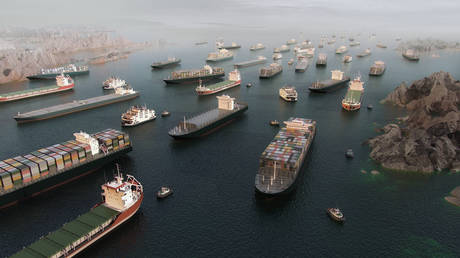
Iran and US Agree to Establish Strait of Hormuz Hotline Iran and the United States just agreed to talk more in the world’s most sensitive oil chokepoint — but not necessarily to trust each other more. A new “hotline” for the Strait of Hormuz promises fewer accidental clashes, even as Tehran insists it is tightening, not loosening, its grip on the waterway.
Tehran’s spin: Control first, deconfliction second
From the Iranian government’s vantage point, the hotline is a tool of control, not concession. Iranian Parliament Speaker and chief negotiator Mohammad Bagher Ghalibaf is presenting the deal as a structural shift in how the strait is run, with the management of Hormuz fundamentally altered from the pre-war status quo.
Iranian officials stress that the communications hub is about resolving “incidents” and “misunderstandings,” not about asking permission. The line is explicitly framed as a mechanism to “prevent and resolve any misunderstandings” involving ships in transit, while Tehran insists the strait will be “managed under Iranian arrangements” and will “never return to what it was before the war.” In other words: Iran wants more predictable traffic, but on its own terms.
Washington’s angle: Risk management, not recognition
On the US side, the hotline looks less like a strategic surrender and more like classic deconfliction. The very need for a direct line underscores how easily mishaps, miscalculation, or mixed maritime guidance could trigger a crisis. The fact that the deal emerged from broader talks in Switzerland — which also touched on frozen Iranian assets and economic measures — suggests Washington sees this as part of a wider risk-reduction package rather than a blessing of Iran’s expanded role in Hormuz.
Common ground, uneasy waters
Both sides are converging on one narrow, pragmatic goal: don’t let confusion at sea start the next war. Yet they diverge sharply on what comes next. For Iran, the hotline is a symbol of its centrality and control; for the US, it’s an insurance policy against that very reality.
Write a comment