Kalashnikov Signs Deal to Supply Small Arms to India
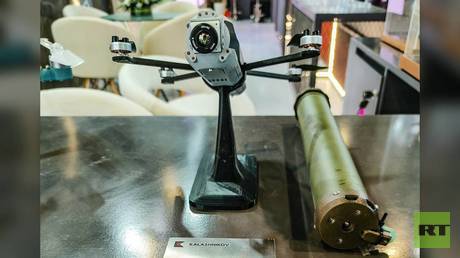
Kalashnikov Signs Deal to Supply Small Arms to India Russia’s Kalashnikov brand is muscling deeper into India’s security market, pitching its latest deal as smart homeland protection while critics see a quiet normalization of Russian arms amid geopolitical crosswinds.
Moscow’s pitch: drones are the new enemy
From the Russian side, the narrative is simple: this is tech, not politics. Kalashnikov has signed a pact to supply anti-drone shotguns, specialized cartridges and pistols to Indian partners, with delivery expected by year’s end. The company frames it as a response to a booming global market for counter‑UAV tools, calling anti‑drone protection “among the most popular in the world” and its products “effective and proven.”
Russian state-linked outlets also stress this is part of a broader ecosystem: the deal was sealed at the India Homeland Security Expo, where Kalashnikov showcased anti‑UAV Saiga and MP‑155 12‑gauge guns and UAVs like the Karakurt and Goliath, plus the SKAT 350 M (GARUDA in India).
New deal, old partnership
For New Delhi, the move sits neatly inside a longer project of managed dependence. Kalashnikov’s new agreement to supply “civilian small arms to Indian customers” comes on top of existing joint production lines: Indo‑Russian Rifles Private Limited has already begun building 600,000 AK‑203 assault rifles in India over ten years under the Modi government’s “Make in India” banner, using Russian tech and certified equipment.
Russian and Indian official narratives converge on three talking points: this is civilian‑market oriented, it boosts India’s self‑reliance, and it responds to real drone threats along borders and critical infrastructure.
The contrast: security vs. optics
Where they diverge is on optics. Moscow touts a clean commercial expansion — “to supply civilian small arms to Indian customers” — while Indian messaging folds the deal into a sober, technocratic story of domestic manufacturing and homeland security.
Left unsaid on both sides: expanding Kalashnikov’s footprint binds India more tightly to Russian defense tech at a time when New Delhi is also courting Western suppliers — a balancing act that’s getting harder to spin as purely business.
Write a comment