Day 77: Adaptive Resource Allocation - Building Self-Optimizing Log Processing Systems
Day 77: Adaptive Resource Allocation - Building Self-Optimizing Log Processing Systems
What We'll Build Today
By the end of this lesson, you'll have created a complete adaptive resource allocation system with these core capabilities:
Today's Mission: Build a System That Thinks for Itself
Ever watched a busy restaurant during rush hour? Smart managers don't wait for chaos—they anticipate the dinner crowd and adjust staff accordingly. Your distributed log processing system needs the same intelligence. Today, we're building adaptive resource allocation that automatically scales resources based on real-time demand.
What You'll Build: A production-ready resource manager that monitors system metrics, predicts load patterns, and automatically adjusts CPU, memory, and processing capacity to maintain optimal performance.
The Smart Resource Problem
Traditional static resource allocation is like having the same number of cashiers whether it's 3 AM or Black Friday. Yesterday's delta encoding reduced your storage footprint, but what happens when log volume suddenly spikes 10x during a system incident? Your efficiently compressed logs become useless if your processing pipeline can't keep up.
Netflix processes over 1 trillion events daily with wildly varying load patterns. Their secret isn't massive over-provisioning—it's intelligent resource allocation that adapts in real-time.
[

](https://substackcdn.com/image/fetch/\)s!D6U!,fauto,qauto:good,flprogressive:steep/https%3A%2F%2Fsubstack-post-media.s3.amazonaws.com%2Fpublic%2Fimages%2F95d9f295-e3ad-452e-a440-91b01c2536d81238x968.png)
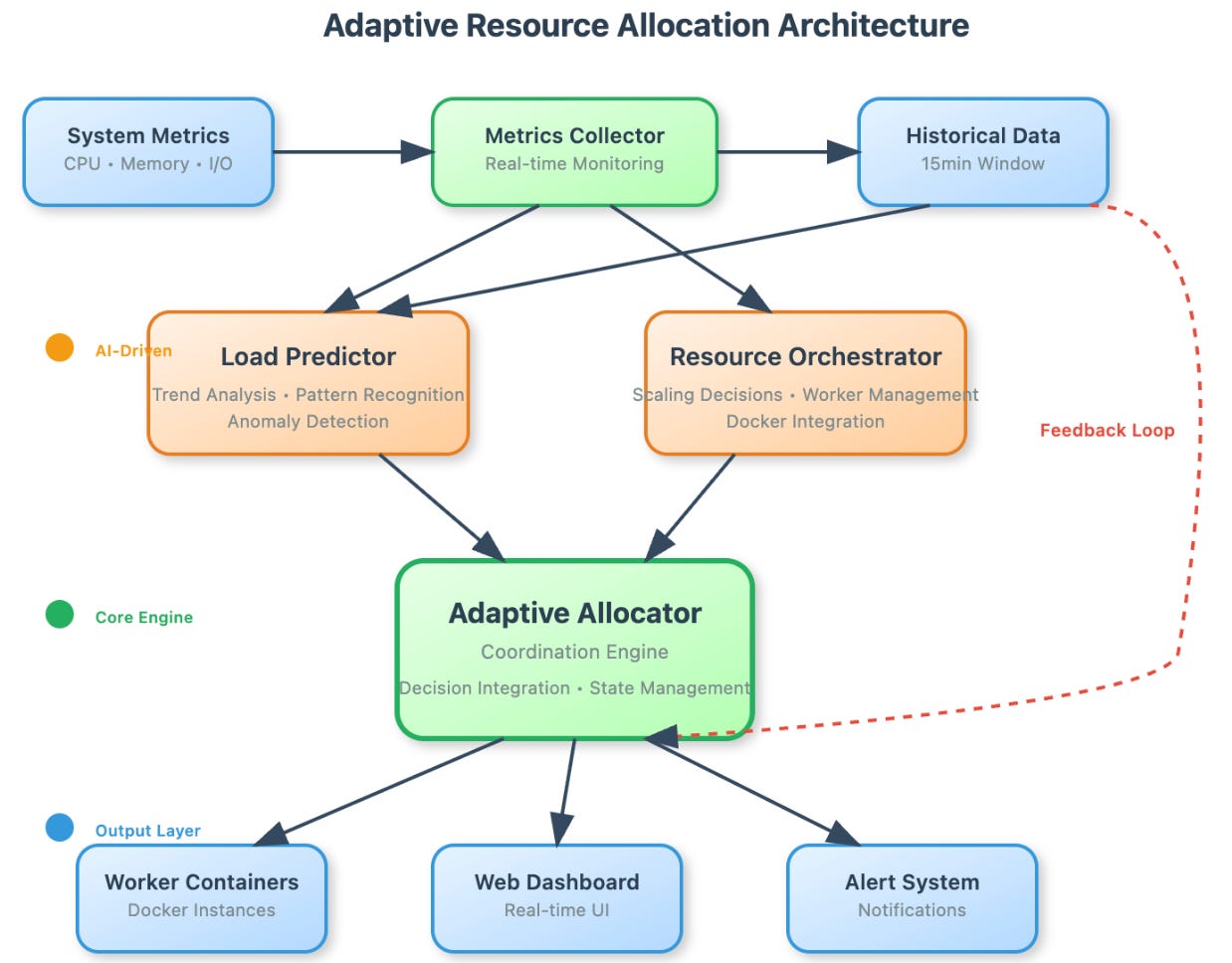
\[Component Architecture Diagram\]
Core Architecture: The Resource Orchestra
[Read more](https://sdcourse.substack.com/p/day-77-adaptive-resource-allocation)
Write a comment