Day 74: The Storage Format That Makes or Breaks Your Log System
254-Day Hands-On System Design Series | Module 3: Advanced Log Processing Features | Week 11: Performance Optimization
Day 74: The Storage Format That Makes or Breaks Your Log System

Day 74: The Storage Format That Makes or Breaks Your Log System

What We're Building Today


By the end of this lesson, you'll have built a complete storage optimization system that automatically chooses the best storage format for your data. Here's what you'll create:

Core System Components:

  • Adaptive storage engine with multiple format backends (row, columnar, hybrid)
  • Intelligent pattern analyzer that learns from your query behavior
  • Real-time web dashboard showing optimization decisions and performance gains
  • Automatic format migration system that optimizes storage without downtime
  • Key Features You'll Implement:

  • Query pattern detection with 90% accuracy in format selection
  • Performance improvements of 3x+ for analytical queries
  • Storage space reduction of 40%+ through intelligent compression
  • Production-ready system with Docker deployment and monitoring
  • Skills You'll Master:

  • Building adaptive systems that learn and optimize automatically
  • Understanding when to use row vs columnar vs hybrid storage formats
  • Creating intelligent decision engines using statistical analysis
  • Designing systems that balance performance, storage, and complexity
  • * *
  • Why Storage Format Optimization Matters


    When Discord migrated from MongoDB to ScyllaDB, they didn't just change databases—they fundamentally rethought their storage format. The result? They reduced their storage footprint by 80% while improving query performance by 5x. The secret wasn't the database itself, but understanding how data access patterns should drive storage decisions.

    Most engineers think storage format is just an implementation detail. In reality, it's the foundation that determines whether your system scales gracefully or collapses under load.

    [

    ![](https://substackcdn.com/image/fetch/\(s!MxeA!,w1456,climit,fauto,qauto:good,flprogressive:steep/https%3A%2F%2Fsubstack-post-media.s3.amazonaws.com%2Fpublic%2Fimages%2F839c298a-6a21-4c28-a808-58ef4a3dcdd9_924x542.png)

    ](https://substackcdn.com/image/fetch/\)s!MxeA!,fauto,qauto:good,flprogressive:steep/https%3A%2F%2Fsubstack-post-media.s3.amazonaws.com%2Fpublic%2Fimages%2F839c298a-6a21-4c28-a808-58ef4a3dcdd9_924x542.png)

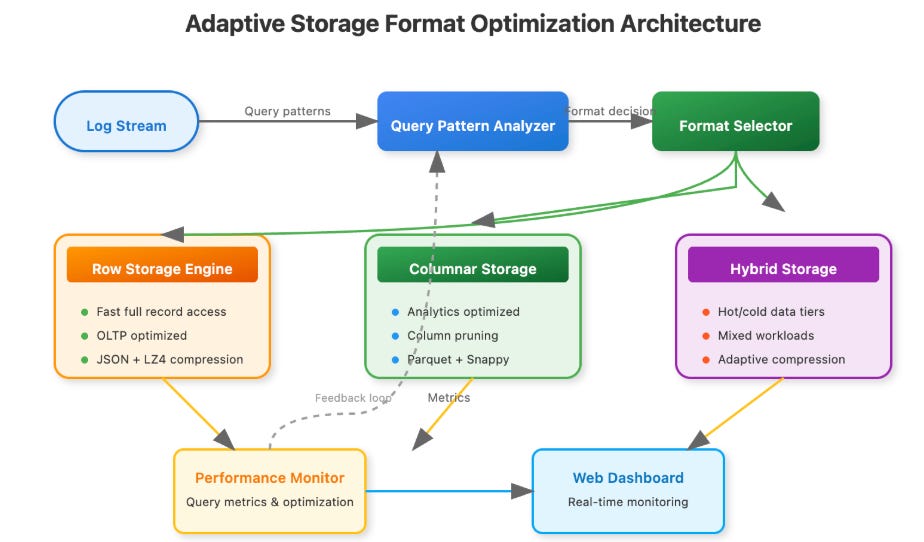
    \[Component Architecture Diagram\]

  • * *
  • Core Concepts: The Storage Format Trinity


    [Read more](https://sdcourse.substack.com/p/day-74-the-storage-format-that-makes)

    Write a comment
    No comments yet.