Blue Origin's New Glenn Rocket Explodes During Static Fire Test
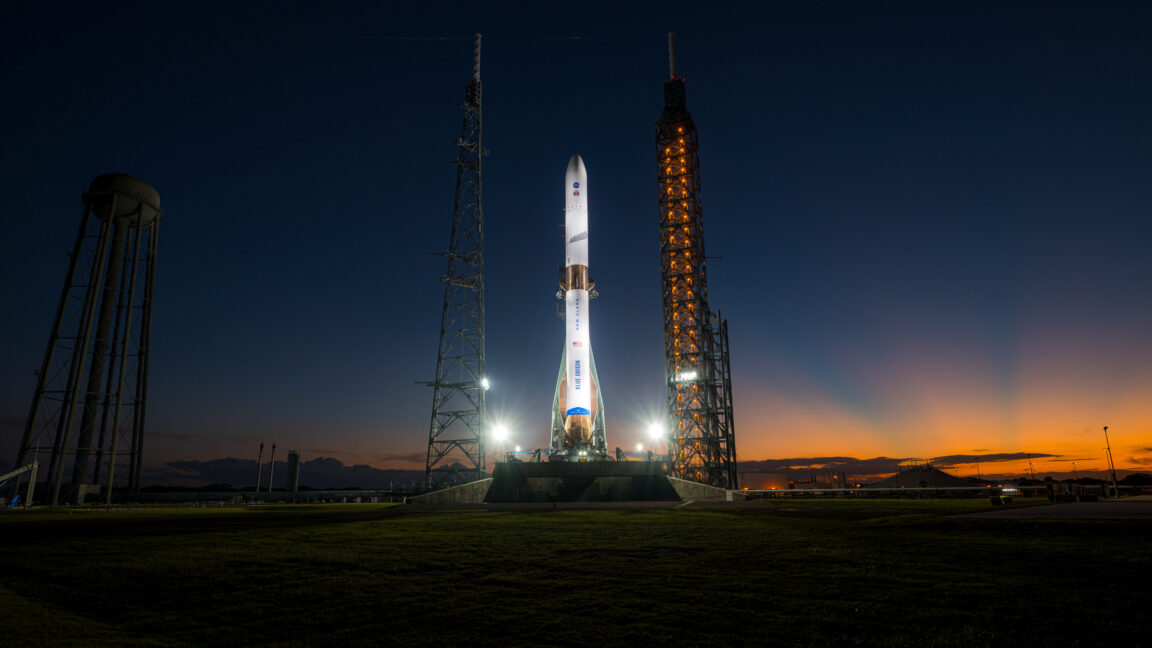
Blue Origin’s New Glenn Rocket Explodes During Static Fire Test Blue Origin’s decade-long effort to field its heavyweight New Glenn booster has been thrown into crisis after a test-stand explosion devastated its only operational launch pad in Florida, raising urgent questions for NASA, Amazon and the wider US launch market.
On the evening of May 28, Blue Origin attempted a static fire of New Glenn at Launch Complex 36A (LC‑36A) on Cape Canaveral. Cameras on commercial livestreams captured the moment the fully fueled booster erupted into “one of the largest rocket explosions in U.S. history,” with the methane-fueled first stage producing a massive fireball over the site. All personnel were later confirmed safe, but the event has been described as “the most spectacular rocket explosion since N1,” the Soviet giant that failed in 1969.
By early May 29, initial assessments pointed to extensive damage at LC‑36A, which Blue Origin spent years and “at least hundreds of millions of dollars” developing and which has no operational backup for New Glenn. Aerospace sources likened the infrastructure loss to SpaceX’s 2016 AMOS‑6 pad disaster, noting that rebuilding a comparably shattered site previously took “more than a year.”
Industry analysts quickly framed the failure as “catastrophic” for Blue Origin and the broader US launch ecosystem. With other US heavy‑lift vehicles offline, the setback leaves SpaceX’s Falcon 9 and Falcon Heavy as the only medium- and heavy‑lift workhorses for the near term, and threatens schedules for NASA’s Artemis lunar architecture that depend on New Glenn and the Blue Moon lander.
Blue Origin’s leadership has tried to project resilience. Founder Jeff Bezos called it a “very rough day” but vowed the company would “rebuild whatever needs rebuilding and get back to flying.” Chief executive Dave Limp later said a preliminary pad survey found the “propellant farm, oxygen, liquid hydrogen and LNG tanks are all in good shape,” sparing hardware with long lead times, and announced plans to rebuild LC‑36A and return New Glenn to flight “before the end of this year.”
Veterans of SpaceX’s AMOS‑6 recovery effort, however, caution that Blue Origin’s proposed timeline—roughly six months—is “very aggressive,” with one pad‑rebuild estimate calling 15 months a “best case” scenario. They note that both failures struck just as each company was poised to scale up launch cadence and while NASA was relying on those rockets for critical human‑spaceflight milestones.
Across the industry, the episode has reignited a familiar, sober refrain. Elon Musk, who has repeatedly emphasized the difficulty of orbital launch, once recalled being shown “a compilation of rocket failures” at the start of SpaceX and knowing “the probability of SpaceX failing was high” — a reminder, as one viral post concluded, that “Rockets are hard.”
Continue reading https://foxvector.com/stories/019e8fc4-01e4-368f-732b-0e622a80ce09
Write a comment