Presidents of Colombia and US Meet to Discuss Bilateral Relations
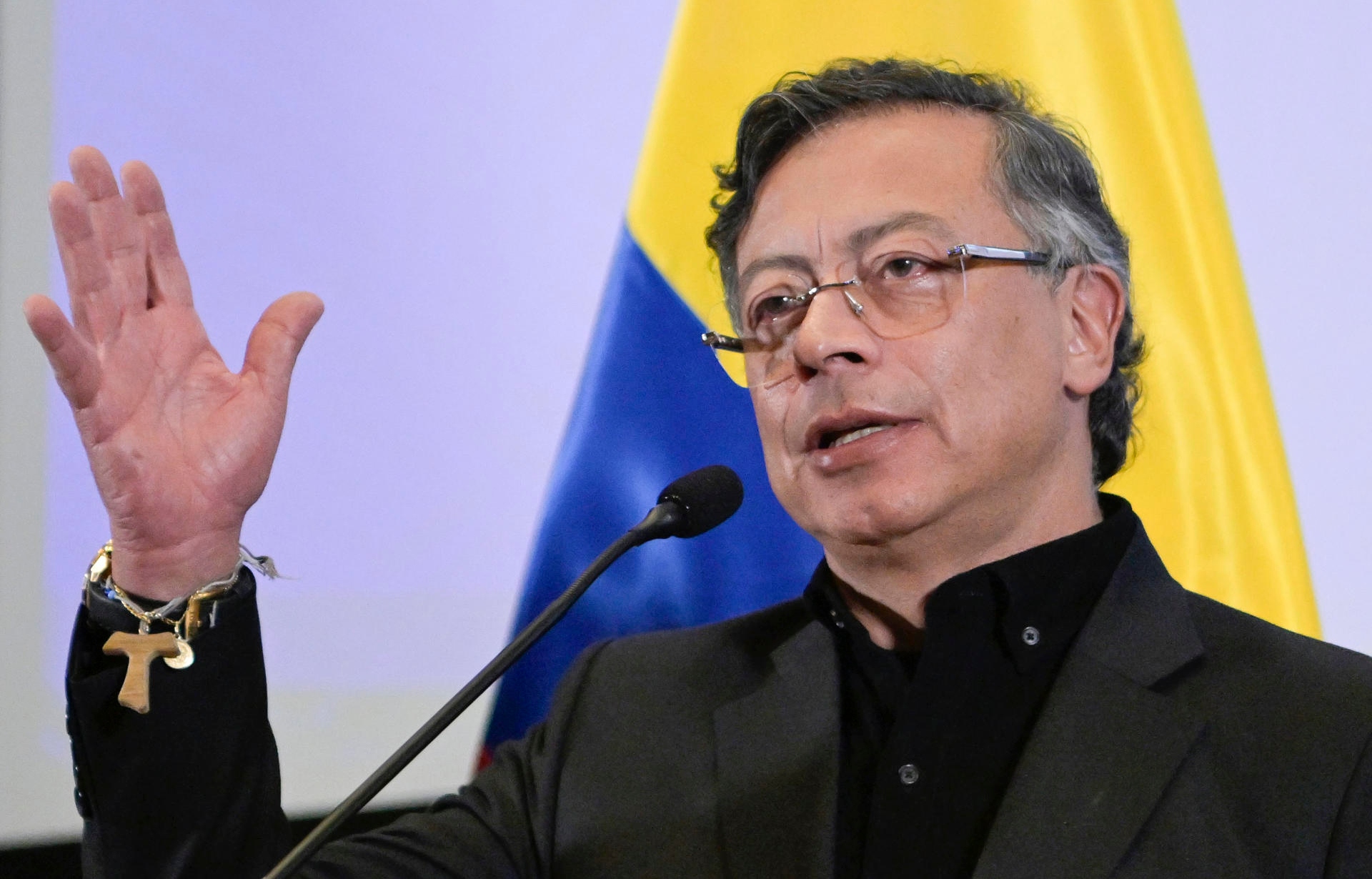
Presidents of Colombia and US Meet to Discuss Bilateral Relations Opposition Opposition sources acknowledge Petro’s claim that the meeting restored a direct, respectful dialogue but argue that Trump used it to assert U.S. dominance, keep Colombia decertified, and force a harder line against narcoguerrilla and organized crime. They frame the encounter as exposing Petro’s weakness and showing that his security and regional agendas will be tightly constrained by Washington’s conditions. @dgj2…hzme @htcq…4692 The presidents of Colombia, Gustavo Petro, and the United States, Donald Trump, held a bilateral meeting framed by both sides as a reset of high-level dialogue on issues central to the relationship between the two countries. Coverage agrees that the encounter was described publicly as direct and frank, with an emphasis on restoring a channel in which differences could be addressed with mutual respect. Shared accounts highlight that the agenda included the fight against drug trafficking, specifically the verification of progress in eradicating coca crops through objective and scientific mechanisms, as well as broader regional themes such as a proposed energy plan for the Americas and coordinated approaches to the situation in Venezuela, including its economic recovery, the role of the oil sector, and cooperation against narcotraffickers.
Reports from across the spectrum also converge on the idea that the meeting took place in a complex geopolitical context, in which the United States continues to see Colombia as a strategic ally on security, democracy, and energy in the hemisphere. Both sides acknowledge that the discussion went beyond traditional security ties to touch on energy transition, clean energy cooperation, and regional integration, while still situating the relationship within long-standing institutional frameworks such as anti-drug agreements, certification and decertification mechanisms, and shared commitments to combating organized crime. There is agreement that future steps will involve technical follow-up, verification mechanisms, and possible joint initiatives in energy and Venezuela-related policy, signaling that the meeting was not an isolated event but part of an ongoing bilateral and regional strategy.
Points of Contention
Tone and balance of power. Opposition-aligned sources simultaneously quote Petro’s framing of a respectful, frank dialogue while stressing that, in practical terms, Trump used the meeting to “mark the field” and impose clear limits on Colombia’s room for maneuver. They describe a visible asymmetry of power in which Petro appears weak, constrained by Washington’s conditions, and forced to accept that the United States set the agenda. Government-aligned coverage, by contrast, tends to present the same encounter as one between equals, highlighting respect, shared interests, and the restoration of a constructive partnership rather than a hierarchical dynamic.
Anti-drug policy and certification. Opposition outlets converge on the claim that the United States maintained a tough line on narcotrafficking and made clear that Colombia’s decertification would not be lifted, portraying this as a failure of Petro’s strategy and a sign that Washington does not trust his approach to coca eradication. They highlight Trump’s insistence on ending any tolerance of narcoguerrilla groups and organized crime, interpreting it as a warning that Colombia must realign its security policy. Government-aligned narratives would be more likely to emphasize the agreement to use scientific, objective mechanisms to verify coca eradication progress and to frame the ongoing certification issue as a technical, negotiable process within a cooperative framework.
Regional agenda and Venezuela. Opposition coverage acknowledges that Venezuela’s recovery and collaboration in the oil sector were on the table, but suggests that the discussion mainly served U.S. geopolitical objectives and constrained Petro’s regional ambitions. It portrays Trump as using the Venezuelan file to reaffirm expectations on democracy and security, thereby limiting Colombia’s autonomy in mediating or designing alternatives for the region. Government-aligned stories would instead stress the meeting as an opportunity for Colombia to shape a regional plan for the Americas, expand its voice in debates on Venezuela, and position itself as a key partner in both energy transition and post-crisis reconstruction.
Energy transition and long-term vision. Opposition-aligned narratives do report Petro’s proposal for an Americas-wide clean energy and energy articulation plan, but they often treat it as secondary to the immediate pressure over security and decertification, implying that U.S. priorities remain traditional hard-security concerns. They underline that despite Petro’s discourse on energy transition, the United States’ leverage lies in conditioning cooperation on stricter anti-drug results and political alignment. Government-aligned coverage would be inclined to invert that hierarchy, foregrounding the energy plan as a strategic success, framing the meeting as a step toward repositioning Colombia in global clean energy debates, and downplaying any impression that the country was reprimanded or cornered.
In summary, Opposition coverage tends to underline the asymmetry of power, the firmness of U.S. demands on narcotrafficking and certification, and the ways in which Trump constrained Petro’s security and regional agenda, while Government-aligned coverage tends to emphasize mutual respect, shared strategic projects in energy and regional policy, and the meeting as a diplomatic success that broadens Colombia’s role rather than narrows it. Story coverage
Write a comment