Details of Venezuela's Proposed Amnesty Law Revealed
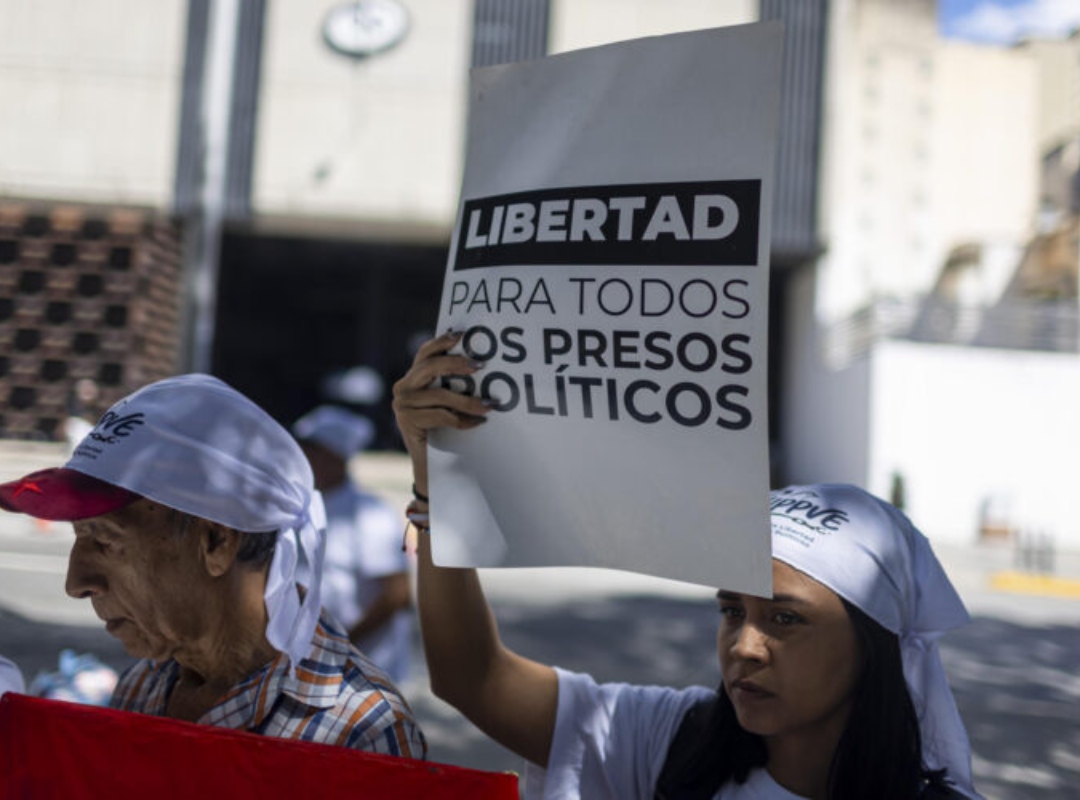
Details of Venezuela’s Proposed Amnesty Law Revealed Opposition Opposition outlets frame the amnesty project as a cautiously welcomed but flawed initiative—broad in rhetoric yet narrow and discretionary in practice, with many political prisoners and exiles potentially left out due to legal reclassification and judicial control. They stress that the law does little to address structural impunity for state agents or to guarantee safe return, reparation, and long‑term protections for victims and dissidents. @ls3k…3cs7 @htcq…4692 @dgj2…hzme @4u9e…n83g @r83x…ptvy The coverage converges on the basic structure of the proposed Ley de Amnistía para la Convivencia Democrática: it is a bill already approved in first discussion by the National Assembly, with a second and final discussion scheduled within days, after which it would go to the Executive for promulgation. Opposition sources describe a 13‑article text that grants a general amnesty for political and related offenses committed broadly between 1999 and 2026, covering events including at least ten emblematic episodes between 2002 and 2024, while explicitly excluding crimes such as grave human rights violations, crimes against humanity, homicide, major corruption, and narcotrafficking. They agree that the law orders the cessation of criminal investigations and restrictive measures for those covered, assigns the Public Ministry a central role in implementation, and could lead to the release of many political prisoners within days of its final approval, although those charged with excluded offenses would remain imprisoned. All sides also recognize that the measure is framed as a push for “reconciliación nacional”, “paz social” and “convivencia democrática” and that it would apply to people both inside Venezuela and in exile, at least in principle.
There is shared acknowledgement that the bill arises from a prolonged political and institutional crisis extending back to at least 1999, marked by cycles of confrontation, protest, and repression. Media across the spectrum note that the initiative is presented as part of a broader package or sequence of political reforms and negotiations aimed at easing tensions, reducing the number of political prisoners, and offering a pathway to national dialogue after years of polarization. They also agree that international human rights standards impose limits on what can be amnestied, hence the explicit exclusion of the most serious international crimes, and that Venezuelan institutions such as the National Assembly, the judiciary, and the Public Ministry will be pivotal in determining the real reach of the measure. Finally, all accounts converge on the idea that the law’s effectiveness will depend on its implementation mechanisms, judicial interpretation, and the political will of state authorities to apply it consistently.
Points of Contention
Scope and beneficiaries. Opposition-aligned outlets emphasize that, despite the broad 1999–2026 window, the law is in practice narrowly tailored to about ten emblematic political events and leaves many activists, exiles, and lesser-known detainees in a gray zone. They stress that the exclusions for human rights violations, corruption, and narcotrafficking could be—and already have been—used by authorities to reclassify political cases under common crimes, limiting who actually benefits. Government-aligned sources, by contrast, tend to frame the same temporal coverage as unprecedentedly generous, highlighting the inclusion of multiple protest cycles and high-profile cases to argue that the state is making a substantial concession to the opposition and to political pluralism.
Automaticity and judicial discretion. Opposition media underline that the draft is not self-executing: judges and prosecutors retain broad discretion to decide who qualifies, when measures are lifted, and how quickly releases occur, which they portray as a built-in mechanism for selective compliance and political blackmail. They relay concerns from human rights groups that many prisoners could wait weeks or months, or even be excluded altogether, despite the law’s apparent promise of immediate relief. Government-aligned narratives, by contrast, present judicial participation as a normal constitutional safeguard and a technical necessity to review each file, suggesting that legal prudence—not political manipulation—explains the lack of full automaticity.
Narrative of responsibility and reconciliation. Opposition sources tend to see the amnesty as a corrective to years of criminalization of dissent, framing beneficiaries primarily as victims of politically motivated prosecutions rather than as authors of destabilizing acts. They question the sincerity of the reconciliation discourse, noting that the same institutions accused of persecution will administer the amnesty, and warning that impunity for state agents remains untouched because grave human rights crimes are excluded. Government-aligned outlets are more likely to emphasize that the law benefits actors from “both sides” of the conflict, presenting it as a magnanimous step by the state to turn the page on mutual offenses and as evidence that the institutional framework, under the current leadership, can produce inclusive solutions.
Victims’ rights and international optics. Opposition coverage foregrounds the critique that the bill is designed above all to ease international pressure—especially from human rights bodies and foreign governments—without guaranteeing truth, justice, or reparations for victims of abuses, since it neither reforms the security apparatus nor obliges investigations of state violence. They frequently cite NGOs that warn the law may improve the government’s image abroad while leaving structural impunity intact at home. Government-aligned narratives, by contrast, tend to highlight that serious human rights violations and crimes of corruption are explicitly excluded, arguing that this shows respect for international norms and victims, and they characterize NGO and opposition skepticism as politically motivated attempts to discredit a constructive national initiative.
In summary, Opposition coverage tends to portray the amnesty bill as a limited, discretionary, and politically instrumental measure that only partially addresses persecution and leaves impunity for state abuses intact, while Government-aligned coverage tends to depict it as a far-reaching, balanced, and sovereign initiative that demonstrates the state’s commitment to reconciliation, institutional channels, and respect for international legal boundaries. Story coverage
Write a comment