311 Deported Venezuelans Arrive From United States
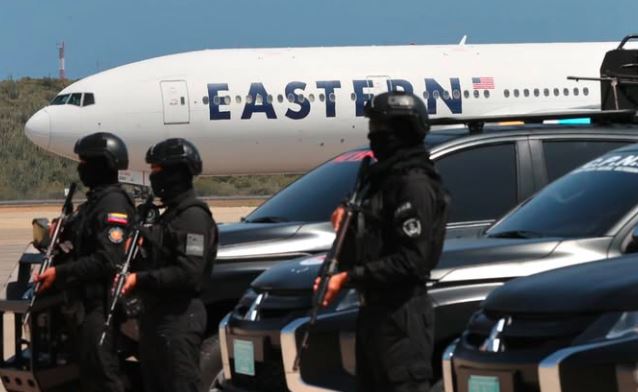
311 Deported Venezuelans Arrive From United States Opposition Opposition coverage frames the 311 arrivals as deported Venezuelans forced back from the United States, viewing the flight as a symptom of the broader migration crisis caused by conditions inside Venezuela. It downplays official triumphalism and implicitly questions whether the state can genuinely reintegrate people who left out of necessity. @htcq…4692
Government-aligned Government-aligned coverage presents the 311 returnees as beneficiaries of the Gran Misión Vuelta a la Patria, choosing to come back and rebuild their lives with state support. It stresses humanitarian assistance, family reunification, and growing numbers of returns as evidence of a successful, compassionate government policy. @5j8p…pah0 @y5vt…wu0d A total of 311 Venezuelans returned to the country on a flight from the United States that arrived at Maiquetía International Airport, with both Opposition and Government-aligned outlets agreeing on the date, place, and basic composition of the group. Reports coincide that the passengers included a majority of adult men along with several dozen women and around ten minors, and that the operation was carried out under a bilateral framework between Caracas and Washington to organize flights for Venezuelans who had been in the United States.
Across the coverage, there is shared acknowledgment that the flight is part of a broader series of organized returns of Venezuelan nationals and that official programs and agreements are in place to manage this process. Both sides describe the stated objectives of these operations as facilitating the social reintegration of returnees in Venezuela, emphasizing themes such as family reunification, institutional support for migrants coming back, and the existence of a state-led framework meant to process and accommodate those who are returning from abroad.
Points of Contention
Characterization of the flight. Opposition outlets frame the arrival primarily as a deportation carried out by United States authorities under a bilateral agreement, highlighting that the passengers were removed from U.S. territory rather than voluntarily returning. Government-aligned media, in contrast, present the operation as part of a national return program, describing the passengers as migrants “returning” or “coming back” under the Gran Misión Vuelta a la Patria, and avoid emphasizing the coercive aspects of U.S. deportation procedures. This difference shapes whether the flight is understood as an externally imposed measure or as a domestically managed humanitarian initiative.
Agency and motivation of returnees. Opposition coverage tends to underline that those on board are deported Venezuelans whose stay in the United States was cut short by immigration enforcement, implying limited choice in the timing and circumstances of their return. Government-aligned outlets instead stress that the migrants “decide” to return and want to “build their future” in Venezuela, attributing a more voluntary and positive agency to the passengers. This framing either foregrounds vulnerability to foreign immigration controls or emphasizes a conscious decision to reintegrate into Venezuelan society.
Role and performance of the Venezuelan state. In Opposition narratives, the state appears mainly as a receiving party within a bilateral mechanism, with less emphasis on proactive protection or long-term support, and with an implicit question about why so many citizens had left in the first place. Government-aligned media heavily spotlight the state as the architect of the Gran Misión Vuelta a la Patria, portraying the government as compassionate and efficient, prioritizing children and family reunification, and highlighting statistics such as more than 20,000 returns as proof of successful policy. Thus, one side is more likely to see these flights as a symptom of deeper governance failures, while the other presents them as evidence of effective social policy.
Broader migration narrative. Opposition outlets typically situate the event within a wider exodus driven by internal crisis, treating mass migration and subsequent deportations as consequences of economic and political conditions in Venezuela, even if not always spelled out in detail. Government-aligned coverage instead folds the flight into an optimistic narrative of national recovery and return, suggesting that improved conditions and government support make coming back desirable and sustainable. This leads to divergent implications: whether the episode primarily reveals ongoing structural problems that push people out, or a turning point in which the country is again attracting its citizens.
In summary, Opposition coverage tends to stress the coerced nature of the return, the role of U.S. deportation policy, and the underlying Venezuelan crisis that pushed people to leave, while Government-aligned coverage tends to highlight voluntary return, the humanitarian and organizational role of the Gran Misión Vuelta a la Patria, and the idea that the state is successfully reintegrating its citizens and encouraging them to rebuild their lives in the country. Story coverage
Write a comment