One Dead, 13 Injured After Amusement Park Ride Collapses in India
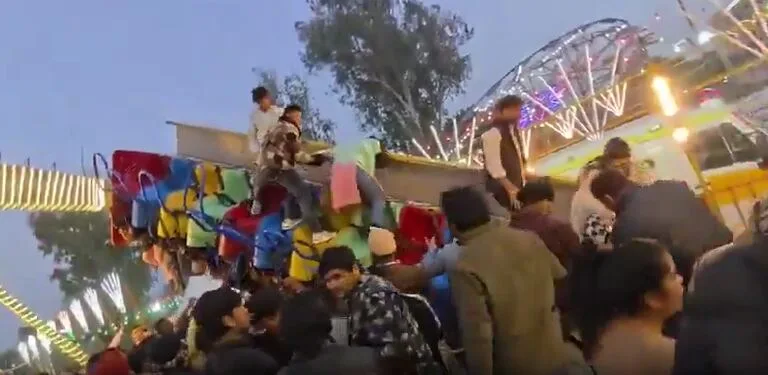
One Dead, 13 Injured After Amusement Park Ride Collapses in India Opposition Opposition-aligned coverage portrays the ride collapse as a predictable outcome of lax safety oversight, outdated permits, and weak regulatory enforcement under the current administration. It stresses systemic blame, calls for independent accountability, and uses the police inspector’s death to highlight institutional failure as much as individual tragedy. @htcq…4692
Government-aligned Government-aligned coverage presents the incident primarily as a rare mechanical failure at a fair, emphasizing the heroism of the deceased officer and the shock of the community. It underscores rapid government action, official investigations, and support for victims, downplaying broader claims of systemic regulatory collapse. @5j8p…pah0 One person died and at least 13 were injured after a large hammer-style amusement ride collapsed at a fairground in Faridabad, India, during full operation. Both Opposition and Government-aligned coverage agree that around two dozen people were on the attraction when it failed, that the deceased was a police officer, and that he was involved in efforts to help or rescue riders at the time of the incident. They concur that disturbing video of the collapse has circulated widely, that emergency services responded on site, and that the event occurred at a prominent local fair, shocking visitors and prompting an immediate shutdown of the ride and an official inquiry.
Across both camps, reports acknowledge that state authorities have opened an investigation into the causes of the collapse and that some form of action has been promised against those found responsible. Coverage on both sides notes that questions are being raised about mechanical integrity, safety inspections, and permitting of such attractions, and that regulators and local administrators have been drawn into the spotlight. There is also agreement that the state government has publicly committed to supporting the injured and the family of the deceased officer, and that the case is being framed as part of a broader concern over amusement ride safety standards in India.
Points of Contention
Responsibility and blame. Opposition-aligned outlets emphasize potential negligence by operators and systemic regulatory failure, highlighting reports of outdated permits and allegedly inadequate technical inspections before the fair opened. They often suggest that local officials and safety inspectors may have looked the other way, implicitly tying responsibility to the current administration’s oversight culture. Government-aligned coverage, by contrast, foregrounds an unforeseen mechanical failure, portrays the collapse as an isolated incident, and is more cautious about assigning fault beyond the ride’s immediate operators.
Regulatory narrative. Opposition coverage uses the incident to question the robustness of safety regimes, treating it as a symptom of deeper institutional weakness and pointing to gaps in enforcement and transparency around inspection protocols. It tends to portray the tragedy as the predictable outcome of lax standards and a pro-business bias that allegedly compromises public safety. Government-aligned reports acknowledge that investigations into permits and inspections are underway but usually frame existing regulations as generally sound, implying that if irregularities occurred, they are exceptions rather than evidence of systemic breakdown.
Portrayal of government response. Opposition-aligned sources describe the state’s response as reactive and driven by public outrage, stressing that compensation promises and disciplinary measures came only after video of the collapse went viral. They underscore demands for accountability and independent probes, implying that without pressure, authorities might minimize the issue. Government-aligned outlets highlight swift official interventions, the announcement of aid to victims, and the launch of formal inquiries, presenting the administration as responsive, committed to punishing those at fault, and focused on restoring public confidence.
Framing of the deceased officer. Opposition coverage honors the police inspector’s actions but also uses his death to underline institutional failures, suggesting that better safety oversight could have prevented a scenario where he needed to intervene so dangerously. It sometimes frames him as a victim of systemic neglect as much as of the physical collapse. Government-aligned reports place stronger emphasis on his heroism and sacrifice, presenting him as a symbol of state dedication and focusing on official tributes and promised support to his family, with less explicit linkage to broader governance criticism.
In summary, Opposition coverage tends to treat the ride collapse as evidence of deeper regulatory rot and governance failure demanding structural accountability, while Government-aligned coverage tends to emphasize an unfortunate mechanical tragedy met with prompt official action and remedial promises.
Story coverage
Write a comment