Opposition Figure Juan Pablo Guanipa Re-Arrested Hours After Release
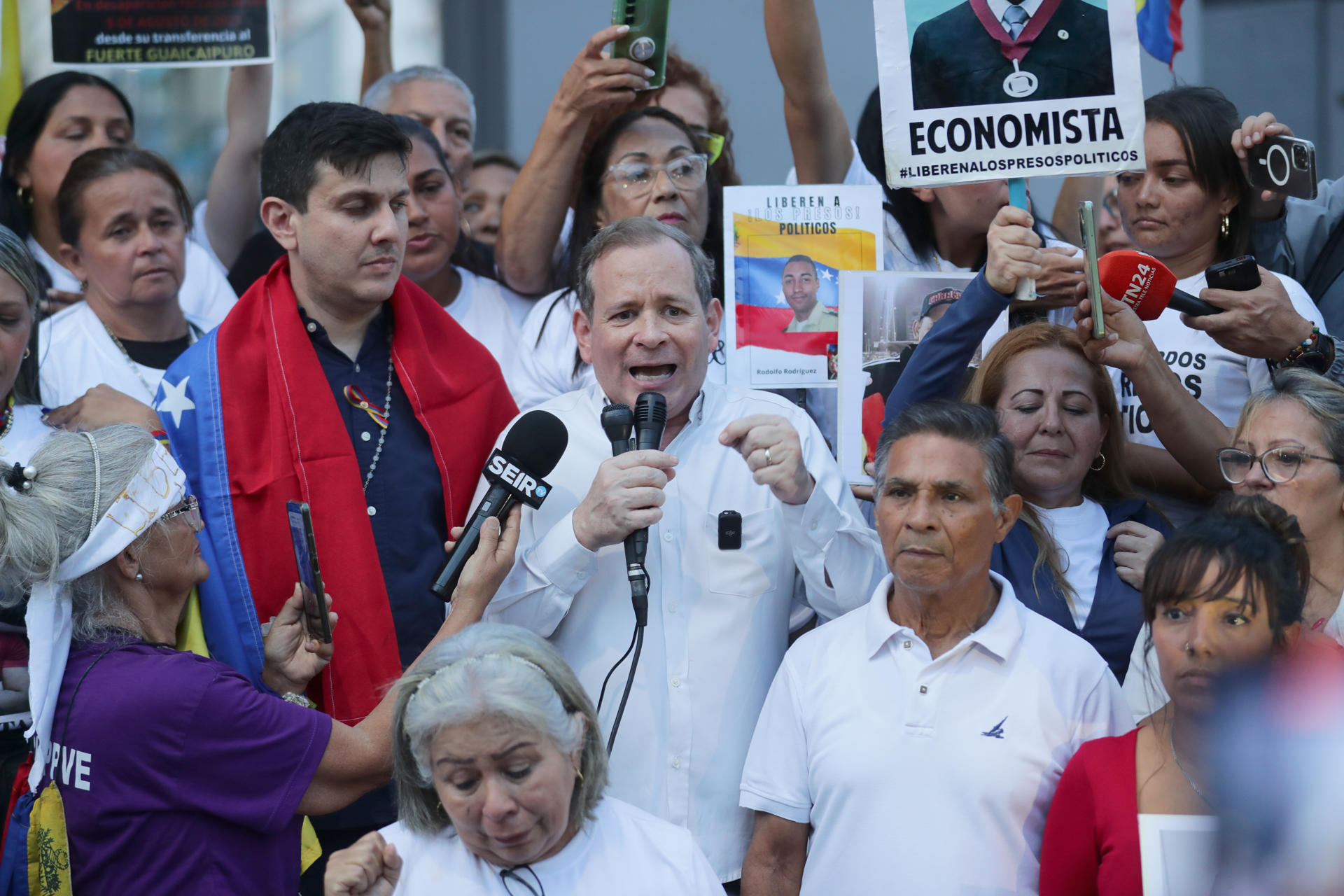
Opposition Figure Juan Pablo Guanipa Re-Arrested Hours After Release Opposition Opposition outlets depict Juan Pablo Guanipa’s re-arrest as an arbitrary and irregular seizure by an unidentified armed group later linked to state security forces, casting it as part of a pattern of persecution against opposition leaders. They question the prosecutor’s justification about breached conditions, arguing it is a political pretext to punish his public activism and silence criticism of the government. @htcq…4692 Juan Pablo Guanipa, a prominent opposition figure and former deputy, was released from prison along with other political opponents before being re-arrested just a few hours later in Caracas. Opposition sources report that he was intercepted by around 10 armed individuals traveling in several vehicles, who took him into custody and later transferred him to a command of the Policía Nacional Bolivariana, where his party Vente Venezuela says he is being held. The Public Prosecutor’s Office (Ministerio Público) has formally announced that it revoked the prior measure of release, alleging that Guanipa failed to comply with judicial conditions attached to his excarceration, and has requested that his legal status be changed to a regime of house arrest.
Across the coverage, it is consistently reported that the Fiscalía is the institution that initiated the revocation of Guanipa’s release, invoking its authority over precautionary measures in criminal proceedings. Both sides likewise situate the episode within the broader context of the Venezuelan justice and security apparatus, involving the Public Prosecutor’s Office, the courts empowered to modify detention regimes, and the Policía Nacional Bolivariana as the custodian force. They also agree that Guanipa had recently taken part in public activities, including a caravan in support of political prisoners, and that his case forms part of a wider pattern in which opposition leaders face criminal processes and alternating periods of imprisonment, conditional release, and possible house arrest.
Points of Contention
Nature of the second detention. Opposition-aligned outlets describe the operation as an arbitrary detention or outright “secuestro,” stressing that an unidentified armed group intercepted Guanipa in unmarked vehicles and only later was his presence in a police command acknowledged. In the absence of explicit pro-government coverage, they characterize the official line as a routine enforcement of judicial measures rather than a kidnapping, suggesting authorities retroactively frame the operation as legal. Government-aligned narratives, where inferred, are more likely to present the incident as a standard police intervention to execute a lawful revocation order, avoiding language that implies illegality or clandestine action.
Legal justification and due process. Opposition sources highlight the Fiscalía’s claim that Guanipa violated conditions of his release but question the legitimacy and transparency of those conditions, suggesting a politically motivated pretext to silence his activism after joining a caravan for political prisoners. They portray the revocation of the precautionary measure and the move toward house arrest as arbitrary steps in a broader pattern of criminalizing dissent. Government-aligned perspectives, by contrast, would emphasize the formal legality of the prosecutor’s decision, framing it as a response to non-compliance with judicially imposed terms and as an example of institutions functioning under the rule of law.
Characterization of Guanipa and the broader conflict. Opposition outlets depict Guanipa as a victimized democratic actor and political leader targeted for his role in supporting prisoners of conscience, placing his re-arrest within a narrative of systematic repression of opposition figures. They stress family testimonies, party denunciations, and the secrecy of the operation to underscore a climate of fear and abuse. Government-aligned coverage, if present, would be more inclined to minimize his political symbolism, presenting him as a defendant subject to legal constraints and downplaying or omitting claims about persecution or the existence of political prisoners.
Control of information and transparency. Opposition reporting denounces an initial lack of clarity about Guanipa’s whereabouts and frames this opacity as deliberate, pointing to conflicting or delayed official versions and the need for parties and relatives to “reveal” where he was held. They argue that the state uses information control and ambiguous security forces to obscure accountability for such operations. Government-aligned outlets, by contrast, would likely stress official communiqués from the Fiscalía or security bodies as authoritative, framing them as sufficient explanation and omitting the irregularities and confusion described by opposition sources.
In summary, Opposition coverage tends to portray Guanipa’s re-arrest as a covert, politically motivated seizure cloaked in legal rhetoric, while Government-aligned coverage tends to frame it as a procedurally valid enforcement of judicial decisions carried out by competent authorities.
Story coverage
Write a comment