Students March Across Venezuela on Youth Day Demanding Release of Political Prisoners
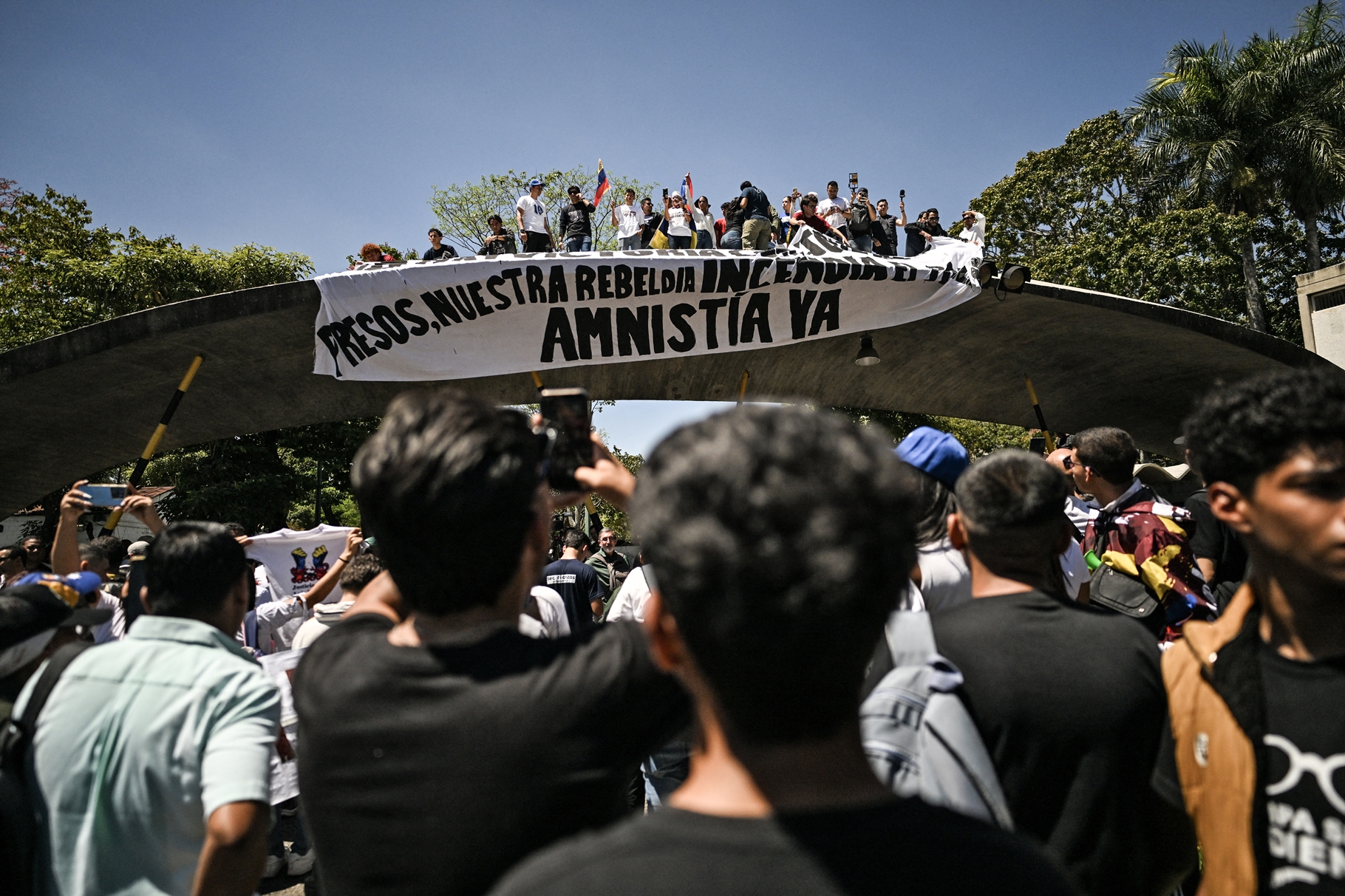
Students March Across Venezuela on Youth Day Demanding Release of Political Prisoners Opposition From the Opposition perspective, the Youth Day marches show a nationwide, peaceful student vanguard reclaiming the streets to demand freedom for all political prisoners and a broad, retroactive amnesty that corrects years of criminalization of dissent. These outlets portray universities as democratic strongholds and argue that sustained civic pressure, not selective goodwill from authorities, is the only path to full liberation and a genuine democratic transition. @htcq…4692 @dgj2…hzme @r83x…ptvy Students across Venezuela held coordinated marches on Youth Day, February 12, in cities including Caracas, Mérida, Maracaibo, Valencia, Barquisimeto and at major public universities such as the Universidad Central de Venezuela (UCV) and the Universidad de Los Andes (ULA). Demonstrators, led mainly by university students and joined by relatives of detainees, human rights advocates, ex-prisoners, and some opposition politicians, walked peacefully toward institutional sites like the Defensoría del Pueblo to deliver documents demanding the release of political prisoners. Opposition-aligned outlets consistently report that the central demand was freedom for all those they describe as political prisoners, citing figures of more than 200 detained students and professors and showing banners such as “Libertad para todos los presos políticos.” The marches, described as among the largest opposition student mobilizations of the past year, reportedly ended without major incidents of repression and often closed with symbolic acts such as painting a national flag with handprints or singing the national anthem.
The coverage converges on framing these events within commemorations of the Día de la Juventud and the historical memory of the Batalla de la Victoria, portraying a new generation of students stepping into an established tradition of youth-led democratic struggle. Both the student organizers and their supporters emphasize institutional channels such as the National Assembly, where a draft amnesty law is under debate, and pressure on state entities like the Defensoría del Pueblo as the immediate political context. The shared narrative places universities—particularly autonomous ones like UCV and ULA—as central civic spaces for peaceful organization, debate about amnesty, and calls for reinstitutionalization of the country. Across the reports, the Youth Day marches are linked to broader themes of civil and political rights, the rule of law, and the role of student movements in shaping possible reforms, including an amnesty that would cover detainees from the late 1990s onward.
Points of Contention
Characterization of detainees and legality. Opposition-aligned outlets uniformly describe those imprisoned as political prisoners held for dissent and protest, arguing their detentions are arbitrary and incompatible with due process. They highlight testimonies from ex-prisoners like Jesús Armas and relatives, asserting that releases depend on political calculation rather than legal review. Government-aligned coverage, when it addresses detainees in similar contexts, tends instead to classify them as individuals implicated in violent acts, conspiracy or destabilization, framing detentions as the result of judicial processes and national security concerns. This side typically avoids the label “political prisoners,” using terms like “persons deprived of liberty” or “those involved in violent protests,” and emphasizes the independence of the judiciary.
Portrayal of the student movement. Opposition sources depict the student movement as a democratic vanguard returning to the “front line” to defend freedoms, presenting students as peaceful, courageous and historically rooted in struggles against authoritarianism. They stress the creativity and non-violence of actions—handprints on the flag, commemorative events, public readings of documents—and claim that fear and repression are being overcome by civic organization. Government-aligned media, in comparable protest episodes, tends to minimize the size and representativeness of student marches, often portraying them as politically manipulated by traditional opposition parties or foreign interests. When covered, students are more likely to be depicted as part of a broader “political opposition agenda” than as autonomous social actors leading a national democratic renewal.
Framing of the amnesty debate and institutions. In Opposition reporting, the amnesty bill is framed as a necessary and overdue corrective to years of criminalization of dissent, with student voices demanding that it be comprehensive and retroactive to 1999 to ensure no political case is excluded. They emphasize that the current draft is inadequate because it allegedly leaves out many prisoners, and they cast the National Assembly as a key, though often resistant, arena that must be pressured from the streets. Government-aligned narratives about amnesty in other contexts generally stress caution, warning against impunity for those accused of “golpismo,” terrorism or violent acts, and they frame any negotiated releases as gestures of magnanimity or peace-building by the executive. In such accounts, institutions like the Assembly and the Supreme Court are presented as guardians of constitutional order preventing a blanket absolution that could legitimize past unrest.
Assessment of the political moment and outcomes. Opposition-aligned outlets treat these Youth Day marches as a turning point that revives national protest capacity, arguing that sustained mobilization can force a democratic transition and the restitution of civil and political rights. They highlight intergenerational support—from elderly relatives to recently released activists—to claim a broad societal backing and predict that students will not leave the streets until all prisoners are freed. Government-aligned coverage in analogous moments tends to downplay the transformative potential of such demonstrations, portraying them either as routine, localized events or as attempts to create a false sense of crisis. That perspective usually insists that institutional dialogue, electoral processes under existing rules, and government-led reforms—not street pressure—will determine outcomes, and it cautions that protests risk feeding polarization or foreign narratives against national sovereignty.
In summary, Opposition coverage tends to frame the Youth Day marches as a peaceful, nationwide student-led awakening against political repression that can catalyze broad amnesty and democratic transition, while Government-aligned coverage tends to either reclassify or downplay such protests, emphasize security and institutional stability, and reject the notion of systemic political imprisonment. Story coverage
Write a comment