Venezuelan Assembly Postpones Final Debate on Amnesty Law
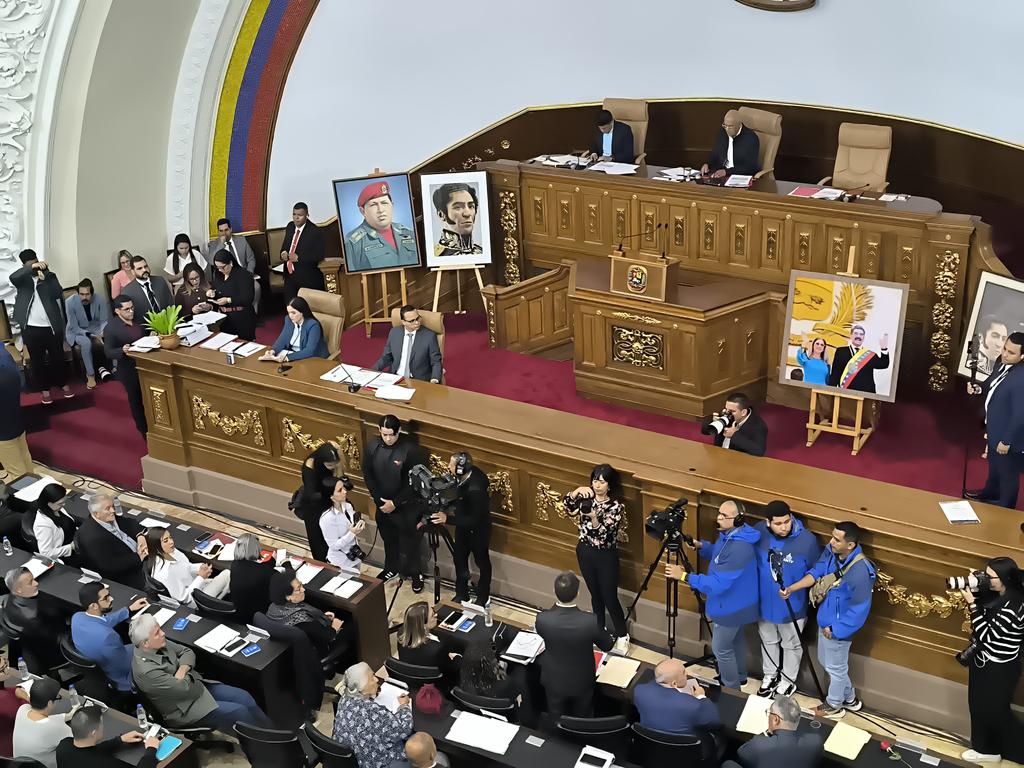
Venezuelan Assembly Postpones Final Debate on Amnesty Law Opposition Opposition media depict the postponed Amnesty Law as a crucial opportunity to liberate and vindicate political prisoners, criticizing the judicial appearance requirement as a stigmatizing condition that signals presumed guilt and preserves government control. They portray the delay as driven by chavista reluctance and internal divisions, warning that excessive conditions and hesitation could empty the amnesty of its reconciliatory power. @htcq…4692 @dgj2…hzme The Venezuelan National Assembly, currently controlled by chavismo, postponed until next week the final debate and approval of a proposed Amnesty Law, after internal disagreements emerged over a specific article. That article requires beneficiaries of the amnesty to appear before judicial authorities, and the dispute over its wording and implications led to the suspension of the session once the text had been approved only up to its sixth article. Both sides acknowledge that the law is framed as a general amnesty measure and is formally justified as part of efforts to promote social peace and democratic coexistence, and they concur that the postponement is procedural rather than a full halt to the legislative initiative, with an expectation that discussion will resume in the short term.
Coverage from across the spectrum describes the same institutional setting and formal purposes: the chavista-dominated Assembly acting as the legislative body, the judiciary as the counterpart institution before which beneficiaries may need to present themselves, and the Constitution as the official reference point for the law’s design. The amnesty initiative is presented on all sides as part of broader political and institutional efforts to address the status of detainees and prosecuted individuals in the context of Venezuela’s prolonged political conflict. Reporting agrees that the law is meant to operate as a general framework, not a case‑by‑case pardon, and that its stated aims are to reduce tensions, foster reconciliation, and normalize political competition within Venezuela’s existing constitutional order.
Points of Contention
Nature of the amnesty beneficiaries. Opposition-aligned outlets portray the measure as directed primarily at prisoners and persecuted figures they describe as political opponents or dissidents, emphasizing that the law is meant to correct injustices derived from politically motivated prosecutions. Government-aligned narratives, by contrast, tend to frame beneficiaries more ambiguously as individuals involved in offenses linked to destabilization or public order disturbances, insisting that any relief must not undermine accountability for serious crimes. While opposition sources stress the innocence or political character of most detainees, pro-government coverage typically avoids the term “political prisoners” and instead underscores the need to differentiate between political acts and criminal conduct.
Interpretation of the judicial appearance requirement. Opposition media describe the obligation for processed individuals to present themselves before the justice system as an implicit presumption of guilt, arguing that it stigmatizes beneficiaries and gives the government leverage to continue criminalization under a legal pretext. Government-aligned outlets defend the clause as a neutral constitutional requirement, asserting that formal judicial procedures are necessary to register the amnesty, clarify legal status, and maintain institutional order. Opposition coverage warns that this condition could become a tool for selective enforcement or new detentions, whereas official-leaning narratives depict it as a technical safeguard that reinforces, rather than undermines, rule-of-law standards.
Motives behind the postponement. Opposition sources suggest that the delay reflects internal chavista divisions and reluctance to fully recognize political prisoners or concede broader political space to opponents, casting the postponement as a sign of bad faith or at least deep mistrust within the ruling camp. Government-aligned perspectives, when they acknowledge tensions, are more likely to present the postponement as a responsible step to refine the bill’s legality and constitutionality, emphasizing due diligence over political hesitation. Thus, where opposition coverage highlights the postponement as symptomatic of a broader pattern of obstruction and control, pro-government messaging tends to normalize it as routine legislative adjustment.
Impact on reconciliation and political climate. Opposition narratives argue that an expansive, unconditional amnesty is essential for genuine national reconciliation, claiming that restrictive conditions and delays dilute its capacity to rebuild trust and open democratic competition. Government-aligned coverage, in turn, usually posits that social peace and coexistence require balancing forgiveness with safeguards against impunity, warning that an overly broad amnesty could encourage future destabilizing acts. As a result, opposition accounts treat the law as a test of the government’s willingness to democratize and demilitarize politics, while government-aligned narratives frame it as a calibrated instrument within a controlled transition toward stability.
In summary, Opposition coverage tends to frame the postponement and contested clauses as evidence of chavismo’s reluctance to fully recognize and remedy political persecution, emphasizing the need for a broad, unconditional amnesty to enable real democratic opening, while Government-aligned coverage tends to justify the delay and conditions as constitutionally grounded safeguards aimed at reconciling peace and institutional order, presenting the amnesty as a carefully bounded gesture rather than a sweeping political concession. Story coverage
Write a comment