Boat Carrying 6 Tons of Food Aid Sinks in Venezuela's Delta Amacuro
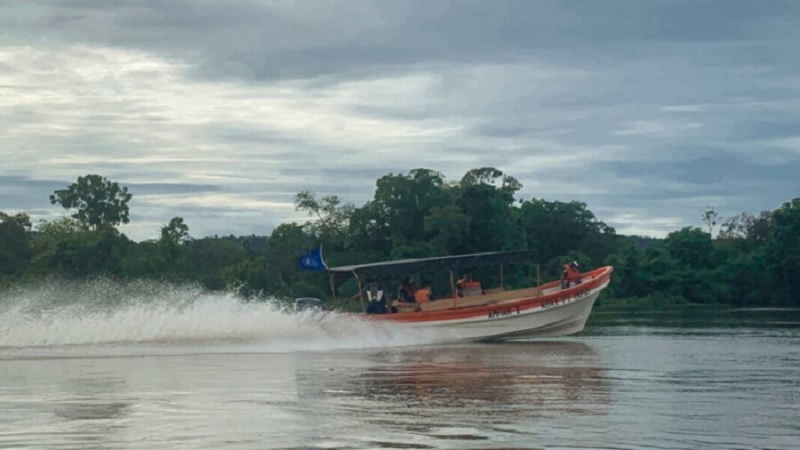
Boat Carrying 6 Tons of Food Aid Sinks in Venezuela’s Delta Amacuro Opposition Opposition outlets describe the boat’s sinking as a major setback for Warao schools and families who depend on international food aid, underscoring that the entire six-ton cargo was lost even though no lives were. They frame the incident within a broader pattern of state neglect, arguing that remote indigenous communities rely on organizations like the World Food Programme and World Vision because government support is inadequate and logistics are unsafe. @htcq…4692 @dgj2…hzme @r83x…ptvy A boat carrying approximately six tons of food aid sank in the remote fluvial area of Capure, in Pedernales municipality, Delta Amacuro state, while en route to indigenous Warao communities and schools. Opposition-aligned reports agree that the vessel was operating on behalf of an international humanitarian organization, variously identifying it as World Vision or the World Food Programme, and all note that the cargo was lost but that there were no injuries or deaths among the crew or passengers. These outlets describe the shipment as part of an aid effort aimed at school feeding and support for indigenous families in hard-to-reach riverine communities, and they emphasize that local residents subsequently called for assistance to recover whatever food supplies might still be salvageable.
Coverage further converges on the broader context of chronic scarcity and vulnerability in Delta Amacuro’s indigenous areas, where communities rely heavily on external food programs due to geographic isolation and systemic deprivation. The reports frame the sunken shipment within ongoing humanitarian initiatives that supplement or substitute for inadequate regular provisioning, stressing that the affected schools and families depend on these deliveries for basic nutrition. They also agree that the responsible aid agencies and partners initiated steps to replace the lost cargo and review operational procedures, presenting the incident as a logistical and safety setback in an already fragile supply chain for marginalized Warao populations.
Points of Contention
Framing of the incident. Opposition-aligned outlets are likely to portray the sinking as evidence of a fragile and under-resourced humanitarian logistics environment, implicitly linked to broader state neglect of remote indigenous regions. Government-aligned media, by contrast, would tend to normalize the mishap as an unfortunate but manageable accident in a challenging river delta, stressing technical or weather-related factors rather than systemic issues. While opposition sources highlight the dramatic loss of food in an already precarious context, pro-government narratives would emphasize that such risks are inherent to serving isolated communities and that operations generally proceed successfully.
Responsibility and blame. Opposition coverage is inclined to suggest that chronic infrastructure deficiencies, weak state presence, and lack of official support for safer transport indirectly contributed to the accident, even if no direct wrongdoing is alleged. Government-aligned outlets would be more likely to absolve state authorities of responsibility, casting the incident as the sole purview of the NGO or UN agency operating the boat and underscoring compliance with regulations. Where the opposition hints that government mismanagement forces humanitarian actors into risky conditions, government-linked media would insist the state provides an enabling framework and that isolated incidents should not be politicized.
Role of international organizations. Opposition sources tend to highlight the centrality of organizations like the World Food Programme and World Vision as critical lifelines filling gaps left by an ineffective public food system. Government-aligned coverage would more likely underscore coordination between these organizations and Venezuelan institutions, presenting the aid as part of a cooperative effort aligned with official social programs. While opposition narratives implicitly question why foreign entities must secure school meals for Warao children, pro-government narratives would celebrate the partnership and downplay any suggestion that state programs are insufficient.
Impact on communities and response. Opposition-aligned media are apt to stress the immediate hardship for Warao families and schools, framing the loss of six tons of food as a severe blow in a context of chronic deprivation and limited alternatives. Government-oriented outlets would focus more on the rapid response, including cargo replacement and continuity of services, to reassure audiences that no long-term disruption will occur. Whereas opposition narratives may amplify local pleas for help and use them to illustrate structural abandonment, government-aligned narratives would highlight institutional capacity, relief measures, and the message that the state and its partners remain in control.
In summary, Opposition coverage tends to cast the sinking as a symptom of broader state neglect and structural crisis in Venezuela’s peripheries, while Government-aligned coverage tends to depict it as an isolated logistical accident effectively mitigated through coordinated institutional and humanitarian responses. Story coverage
Write a comment