Families of Political Prisoners Begin Hunger Strike at Zona 7 Detention Center in Caracas
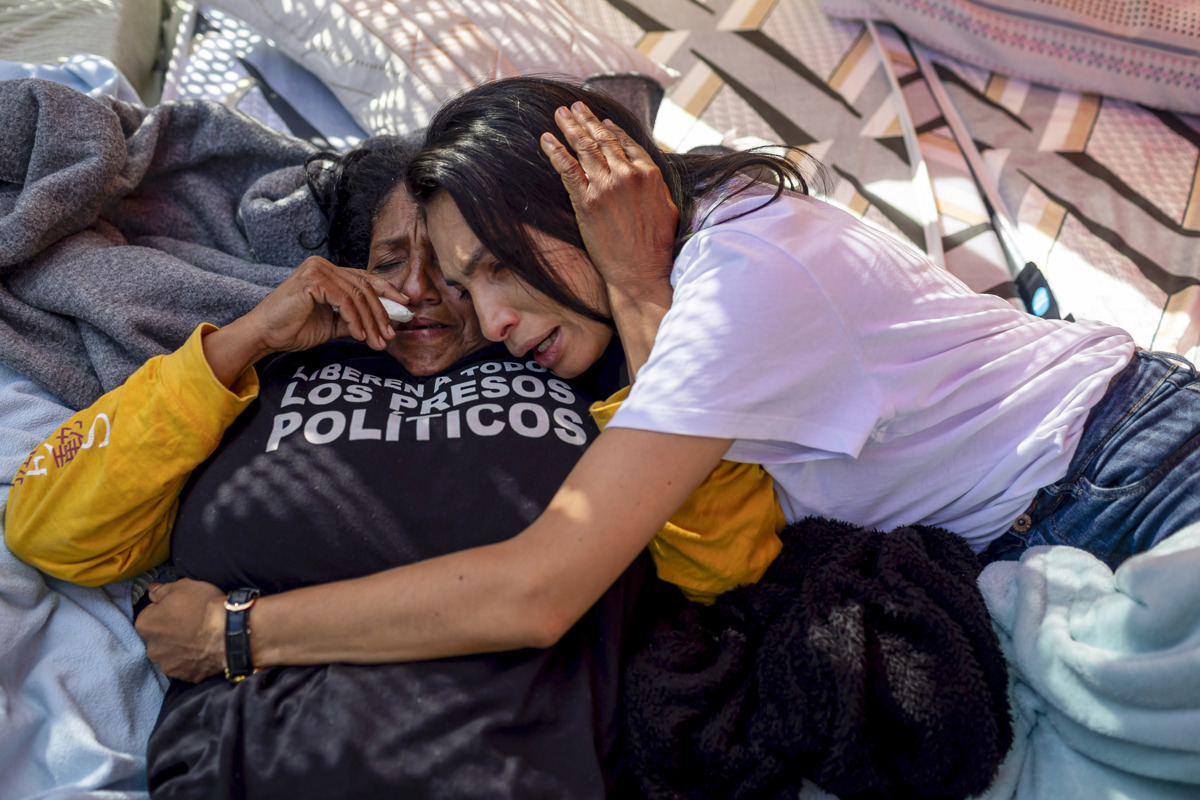
Families of Political Prisoners Begin Hunger Strike at Zona 7 Detention Center in Caracas Opposition Opposition outlets frame the Zona 7 hunger strike as a peaceful but desperate action by relatives of political prisoners and the detainees themselves, triggered by unfulfilled promises of broad amnesty and full freedom. They emphasize worsening health conditions, alleged obstruction of medical care, and the persistence of more than 600 political prisoners as evidence of systematic human-rights abuses and government bad faith. @htcq…4692 @ls3k…3cs7 @4u9e…n83g @r83x…ptvy @dgj2…hzme Families of political prisoners have gathered outside the Zona 7 detention center of the National Police in Boleíta, Caracas, where they began an open-ended hunger strike to demand the full and immediate release of their detained relatives. Opposition-aligned reports describe around ten women, many of them mothers, who chained themselves at the entrance and have now spent between 24 and more than 80 hours without food, with several suffering fainting, blood pressure problems, dehydration, and general collapse that has required on-site medical attention or transfers to hospital. These accounts agree that the prisoners inside Zona 7 also initiated a parallel hunger strike days earlier, that at least some of them show signs of serious decompensation, and that there have been episodes where police officials tried to disperse the outside protest, accused the women of committing a crime, or blocked the delivery of medical supplies and IV fluids destined for the prisoners. Opposition coverage consistently places the start of the outside strike in mid-February, ties it to prior partial releases of 17 detainees, and notes that both Foro Penal and the Comité por la Libertad de los Presos Políticos (ClippVe) are monitoring conditions and verifying prisoner numbers and excarcerations.
Across these same reports, shared contextual elements emphasize that the hunger strike is a direct response to what families describe as government promises of broader amnesty and liberation that have not materialized, despite ongoing debate in the National Assembly over a law of amnesty. It is repeatedly mentioned that, notwithstanding 444 verified releases since early January, human-rights organizations such as Foro Penal still count more than 600 people detained for political reasons nationwide, and that some of those “released” remain under house arrest or other restrictive measures rather than enjoying full freedom. The Zona 7 protest is framed as part of a longer-running pattern of human-rights complaints involving lack of timely medical care, restricted visits, and procedural irregularities in political detention cases. Both the families and supporting NGOs invoke domestic constitutional guarantees and international human-rights standards when describing the need for medical access, judicial review, and legislative reforms that would provide clear, enforceable mechanisms for unconditional release of political prisoners.
Points of Contention
Nature of the detainees. Opposition-aligned outlets uniformly refer to those held in Zona 7 as political prisoners, often specifying that they include activists, union leaders, and even youths with disabilities, and they highlight that their continued detention contradicts earlier public announcements of releases. Government-aligned media, where they address such cases in other contexts, tend to describe similar detainees as individuals linked to destabilization, conspiracy, or common crimes, rather than as prisoners of conscience. In the Zona 7 context this produces a clash between a narrative of unjust persecution and one of security enforcement, shaping whether the hunger strike is seen as a legitimate rights protest or as pressure on lawful institutions.
Characterization of the hunger strike. Opposition reporting presents the hunger strike by families and detainees as a peaceful, desperate measure of last resort, stressing the women’s physical deterioration, the chaining of themselves to the gates, and their insistence on nonviolent protest. Government-aligned narratives in comparable protests often emphasize order, legality, and the duty of security forces, depicting such actions as staged, politicized “shows” or as attempts to generate international media impact rather than genuine humanitarian pleas. As a result, what opposition media frame as legitimate civic resistance and human-rights advocacy is more likely to be portrayed by pro-government outlets as a politicized spectacle that must be controlled or minimized.
Responsibility for health risks and medical access. Opposition sources explicitly blame the government and police authorities for endangering lives, citing alleged blocking of IV fluids, refusal to admit volunteer doctors, and the reported forcing of prisoners to eat under threat of punishment as forms of ill-treatment or psychological torture. Government-aligned outlets, when covering prison health or protests more broadly, tend to foreground official procedures and judicial authorizations, implying that any restrictions are bureaucratic or security requirements rather than punitive neglect, and they often highlight instances where state medical personnel are deployed to counter narratives of abandonment. This divergence leads opposition media to describe a pattern of deliberate cruelty and impunity, while government-aligned coverage generally frames the state as acting within legal and institutional norms.
Meaning of excarcerations and amnesty promises. Opposition reporting stresses that the 17 releases announced so far are insufficient and sometimes only partial, pointing out that many detainees remain under house arrest and that more than 600 people are still behind bars, which in their view exposes the National Assembly’s amnesty initiative and official promises as deceptive or “inhuman.” Government-aligned narratives about excarcerations typically highlight them as evidence of dialogue, clemency, and institutional responsiveness, presenting each release as a substantial concession and progress toward national reconciliation rather than as an obligation to clear a backlog of arbitrary detentions. This clash over how to interpret the same set of releases underpins opposing assessments of whether the hunger strike is justified protest against broken commitments or unwarranted pressure after the state has already shown good will.
In summary, Opposition coverage tends to depict the Zona 7 hunger strike as a legitimate, last-resort human-rights protest by families of unjustly imprisoned opponents facing state neglect and broken amnesty promises, while Government-aligned coverage tends to frame comparable situations as security and legal matters in which detainees are lawfully held, official releases demonstrate clemency, and protests are politicized actions rather than evidence of systemic abuse. Story coverage
Write a comment