27 Members of Tren de Aragua Dissident Faction Charged in New York
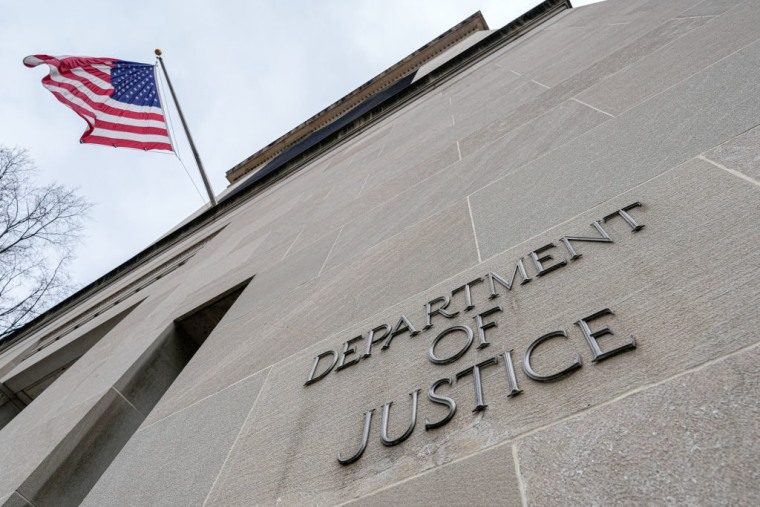
27 Members of Tren de Aragua Dissident Faction Charged in New York Opposition Opposition outlets portray the 27 Anti-Tren indictments in New York as proof that Venezuela-rooted gangs like Tren de Aragua have been allowed to become transnational threats due to institutional weakness and corruption at home. They emphasize the brutality of sex trafficking and migrant exploitation, using the case to argue that both Venezuelan and regional authorities have failed to prevent the export of organized crime and abuse. @dgj2…hzme @htcq…4692 Federal prosecutors in the Southern District of New York have announced charges against 27 alleged members and associates of “Anti-Tren,” described as a dissident faction of the Venezuelan criminal organization Tren de Aragua. The defendants collectively face 38 criminal counts, including racketeering-related offenses, sex trafficking, kidnapping, drug trafficking, and a double homicide committed in the Bronx, with alleged activity spanning New York, New Jersey, and Illinois. According to the indictments as summarized by available reports, the group is accused of running human smuggling and sex-trafficking schemes in which women were coerced, threatened, and assaulted to force them to repay alleged debts through forced prostitution, while violence was used more broadly to maintain internal discipline and territorial control.
Coverage converges on the characterization of Anti-Tren as an organized, transnational criminal structure tied to the broader Tren de Aragua network and operating within the United States. Reports emphasize the role of U.S. federal institutions—particularly federal prosecutors in New York and allied law-enforcement agencies—in leading a broad legal offensive aimed at dismantling the group’s U.S.-based infrastructure. Shared context highlights that the case fits into a wider pattern of cross-border organized crime and human-trafficking enforcement, with the new indictments framed as part of ongoing efforts to crack down on migrant-exploitation schemes and the expansion of Latin American gangs into U.S. cities.
Points of Contention
Political implications and migration. Opposition-aligned outlets frame the case as evidence of how transnational gangs like Tren de Aragua exploit migration flows and weak vetting to embed themselves in U.S. territory, implicitly criticizing both U.S. and Venezuelan authorities for failing to contain the group’s expansion. Government-aligned sources, by contrast, tend to downplay or omit any link between the indictments and broader migration or border-policy failures, treating the arrests as a discrete criminal-justice matter. Where opposition coverage links the case to systemic problems of regional security and governance, government-aligned coverage generally avoids language that could imply structural or policy responsibility.
Characterization of Tren de Aragua and Anti-Tren. Opposition media typically stress the origin of Tren de Aragua in Venezuela’s prison and security system, presenting Anti-Tren as an offshoot that still reflects the brutality and transnational reach of the mother organization. Government-aligned narratives are more likely to emphasize the “dissident” or splinter nature of Anti-Tren, suggesting it operates beyond the control or influence of any state, and may minimize the Venezuelan state’s historical role in the gang’s emergence. Thus, while both sides agree on the group’s criminal profile, opposition coverage foregrounds its Venezuelan roots, whereas government-aligned outlets seek to decouple the gang from current national institutions.
Responsibility of state institutions. Opposition coverage often uses the indictments to question the effectiveness and integrity of Venezuelan law-enforcement and prison systems, implying that institutional corruption or negligence allowed Tren de Aragua and its factions to metastasize abroad. Government-aligned outlets, when they comment, tend to highlight international cooperation and the competence of U.S. authorities without dwelling on Venezuelan institutional failures, sometimes pointing instead to shared regional challenges that affect many countries. This leads opposition sources to frame the case as a symptom of deeper governance breakdown, while government-aligned media frame it as an unfortunate but contained episode.
Human-rights narrative and victims. Opposition media strongly emphasize the suffering of trafficked women and migrants, tying their abuse to failures of protection in both origin and destination countries and suggesting that impunity at home pushed victims into precarious migration paths. Government-aligned coverage, while acknowledging the crimes against victims, tends to focus more on the successful arrests and charges as proof that institutions are functioning, and less on systemic victimization linked to wider political conditions. As a result, opposition reporting invites broader human-rights critiques, whereas government-aligned reporting foregrounds law-enforcement success.
In summary, Opposition coverage tends to leverage the case to highlight systemic governance failures, Venezuelan institutional responsibility, and the intersection of migration, organized crime, and human-rights abuses, while Government-aligned coverage tends to narrow the focus to a limited criminal episode, stress enforcement successes, and decouple the gang’s actions from broader state or policy culpability. Story coverage
Write a comment