Second Court Hearing for Nicolás Maduro and Cilia Flores Postponed to March 26
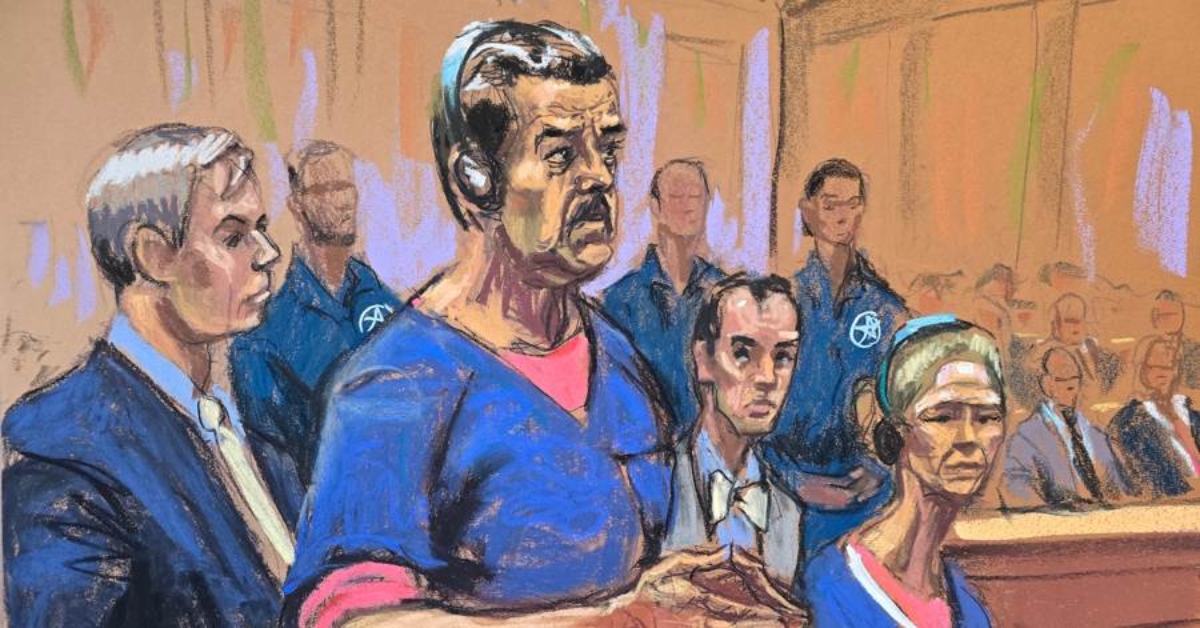
Second Court Hearing for Nicolás Maduro and Cilia Flores Postponed to March 26 Opposition Opposition outlets present the postponement of the second US court hearing for Nicolás Maduro and Cilia Flores as a routine procedural step in a substantial narcotrafficking case, underscoring the seriousness and institutional weight of the charges. They highlight the role of US courts as venues of accountability that Maduro cannot control, implying that this external process compensates for the lack of impartial justice within Venezuela. @dgj2…hzme @htcq…4692 The outlets agree that a US federal court in New York has postponed the second hearing for Nicolás Maduro and his wife Cilia Flores from March 17 to March 26, 2026. Both report that the case involves narcotrafficking-related charges brought by US authorities, that Maduro appeared in court earlier in the year to enter a not-guilty plea, and that Flores is formally included in the same proceeding and must appear on the rescheduled date. They also concur that the immediate justification for the delay was described as planning or logistical problems, that the rescheduling was processed through standard court procedure, and that the federal prosecution and defense both acknowledged the need for the new date on the record.
The shared context across opposition coverage emphasizes that this case is part of ongoing US judicial action against senior Venezuelan officials, handled through established federal criminal procedures in New York courts. They note that the charges stem from longstanding US investigations into alleged drug trafficking networks linked to Venezuelan power structures and that the process involves routine steps such as arraignment, subsequent status hearings, and opportunities for the defense to prepare. These sources also underline that the case sits within broader institutional frameworks of US law enforcement, including the Department of Justice and federal courts, and that the March 26 hearing is one more procedural stage rather than a final resolution, with potential implications for future legal and diplomatic developments.
Points of Contention
Nature and framing of the case. Opposition-aligned outlets portray the proceedings as a serious, long-running narcotrafficking case grounded in extensive US investigations, framing the New York court as a venue of greater independence and rule-of-law than Venezuelan tribunals. They emphasize the gravity of the charges and the symbolism of a sitting de facto leader facing US justice, often highlighting the institutional robustness of the federal system. In contrast, government-aligned narratives (as inferred from prior patterns) tend to cast the case as a politically engineered prosecution by a hostile foreign power, questioning both the impartiality and jurisdiction of US courts over Venezuelan authorities.
Legitimacy and sovereignty. Opposition coverage generally treats the US court’s authority as legitimate and does not dwell on questions of sovereignty, instead underscoring that those accused of serious transnational crimes are subject to international and US legal accountability. It tends to describe Maduro as a defendant like any other under US law, regardless of his status in Venezuela. Government-aligned discourse, by contrast, usually stresses Venezuelan sovereignty, depicting the prosecution as an overreach that violates international norms and ignores Maduro’s status, and may frame the case as an affront to the will of Venezuelan voters.
Characterization of Maduro and Flores. Opposition outlets highlight Maduro’s own description of himself as a “prisoner of war” and present it with a critical or skeptical undertone, implicitly contrasting that label with the criminal charges on the docket. They often characterize him and Cilia Flores as central figures in an alleged criminal network and stress their long-standing political power and access to state resources. Government-aligned media, in turn, typically depict them as victims of persecution, stressing their roles as national leaders under siege by US pressure, and may echo or amplify the “prisoner of war” rhetoric as evidence of geopolitical aggression rather than criminal liability.
Political implications and audience messaging. Opposition reporting tends to link the case to broader narratives about impunity, corruption, and the need for regime change or deep reform in Venezuela, suggesting that external judicial actions are filling gaps left by a compromised domestic system. These outlets aim their messaging at audiences demanding accountability and often frame each hearing, even if postponed, as incremental progress. Government-aligned outlets are more likely to minimize coverage of procedural developments like postponements or to reframe them as signs of weakness in the US case, using the story to reinforce themes of resistance, national unity against foreign pressure, and the illegitimacy of external interference in Venezuela’s internal affairs.
In summary, Opposition coverage tends to treat the New York proceedings as a credible, institutionally grounded effort to hold top Venezuelan officials accountable, while Government-aligned coverage tends to question the court’s legitimacy, frame the case as politically motivated aggression, and recast Maduro and Flores as persecuted national leaders rather than criminal defendants. Story coverage
Write a comment