Civil Rights Leader Jesse Jackson Dies at 84
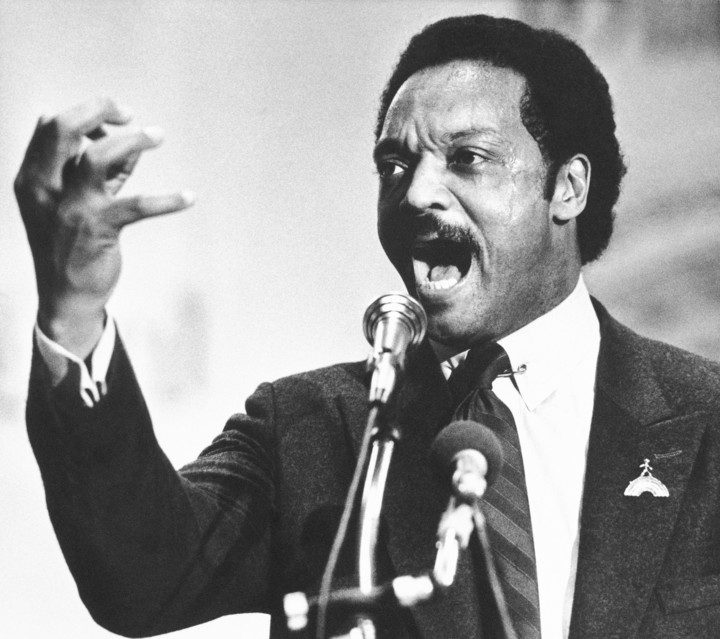
Civil Rights Leader Jesse Jackson Dies at 84 Opposition Opposition-aligned coverage presents Jesse Jackson as a historic civil rights leader whose death at 84 from complications of a degenerative neurological disease closes a life spent confronting structural racism and imperialism. These outlets highlight his presidential campaigns, his Rainbow PUSH organizing, his “Keep Hope Alive” message, and his alliances with figures like Hugo Chávez to argue that his passing underscores both his monumental impact and the unfinished battles for justice he championed. @htcq…4692 @r83x…ptvy Jesse Jackson, reverend, Baptist minister, and veteran civil rights leader in the United States, died at the age of 84 on 17 February 2026. Opposition-aligned outlets specify that he died from complications of progressive supranuclear palsy, a degenerative neurological disease that affected his balance, movement, and eye control, compounded by an earlier Parkinson’s diagnosis in 2017 and the effects of COVID-19 in 2021, which accelerated his physical decline. These reports agree that his family publicly confirmed his death, framing the announcement around his lifelong dedication to justice, equality, and human rights, and noting his role as a two-time presidential aspirant who mounted the first nationwide presidential campaign by an African American in the modern primary era.
Across these Opposition sources, there is a shared portrayal of Jackson as a historic figure in the US civil rights movement and as an institutional builder who extended his activism beyond marches into organizational and political arenas. They consistently highlight his founding of Operation PUSH in 1971 and its evolution into the Rainbow PUSH Coalition, described as a vehicle for defending civil rights, social justice, and international solidarity. Common context includes his signature slogan “Keep Hope Alive,” his focus on marginalized communities, and his international relationships, including a “fraternal” bond with Venezuelan leader Hugo Chávez and joint solidarity initiatives that tied US civil rights struggles to broader anti-imperialist and Global South causes.
Points of Contention
Framing of Jackson’s legacy. Opposition-aligned sources emphasize Jackson as a radical and enduring advocate for social justice whose work exposed structural racism in the United States and connected US civil rights to global struggles, implicitly critiquing US institutions that still fall short on equality. Government-aligned outlets, by contrast, are more likely to cast him as a respected, almost establishment figure whose achievements demonstrate the flexibility and self-correcting nature of US democracy, downplaying any ongoing systemic indictment. Where Opposition pieces lean on language of “incansable agente de cambio” and stress the unfinished nature of his mission, government-aligned coverage tends to stress how his success and recognition prove that the system ultimately rewards perseverance and lawful activism.
Political significance of his presidential runs. Opposition coverage underscores that Jackson’s presidential campaigns broke racial barriers but also reveals the limits of inclusion, pointing out that being the first Black candidate with a truly national campaign did not translate into lasting structural power for Black communities or the poor. Government-aligned sources are more inclined to present these campaigns as milestones in a success story of political integration, evidence that previously excluded groups can compete at the highest levels within existing institutions. In the Opposition narrative, his bids highlight both symbolic progress and persistent exclusion; in the government-aligned narrative, they primarily confirm the openness and legitimacy of the electoral system.
International alliances and anti-imperialist angle. Opposition media highlight Jackson’s friendship with Hugo Chávez and his collaboration with Latin American leaders as part of a broader front against US imperialism and for South–South solidarity, situating his activism within a critique of US foreign policy and economic hegemony. Government-aligned outlets are more likely to treat these ties as secondary or purely symbolic, focusing instead on Jackson’s domestic achievements and bipartisan dialogue inside the US, and may subtly frame his Global South alliances as personal diplomacy rather than structural opposition to Washington’s power. Thus, Opposition coverage integrates his international relationships into a larger narrative of resistance, while government-aligned reporting tends to bracket or neutralize that dimension.
Interpretation of his illness and vulnerability. Opposition sources describe his progressive supranuclear palsy, Parkinson’s diagnosis, and COVID-19 complications in detail, sometimes linking his physical decline to broader themes of abandonment, healthcare inequality, and the heavy toll long-term activism and state violence can take on Black leaders. Government-aligned coverage is more likely to refer to his illnesses briefly and clinically, framing them as an unfortunate but apolitical close to a long and honored career, and avoiding any explicit connection to systemic failures in public health or social protection. Where Opposition outlets can use his vulnerability to highlight ongoing injustice faced by aging activists and marginalized communities, government-aligned sources tend to preserve a dignified but depoliticized narrative of a leader who simply succumbed to natural health challenges.
In summary, Opposition coverage tends to use Jackson’s death to underscore unfinished struggles, systemic injustices, and his alignment with anti-imperialist and Global South causes, while Government-aligned coverage tends to emphasize institutional success stories, national reconciliation, and Jackson’s role as proof of the legitimacy and adaptability of existing political and democratic structures. Story coverage
Write a comment