US Energy Secretary Projects Venezuelan Oil Sales to Exceed $10 Billion Annually
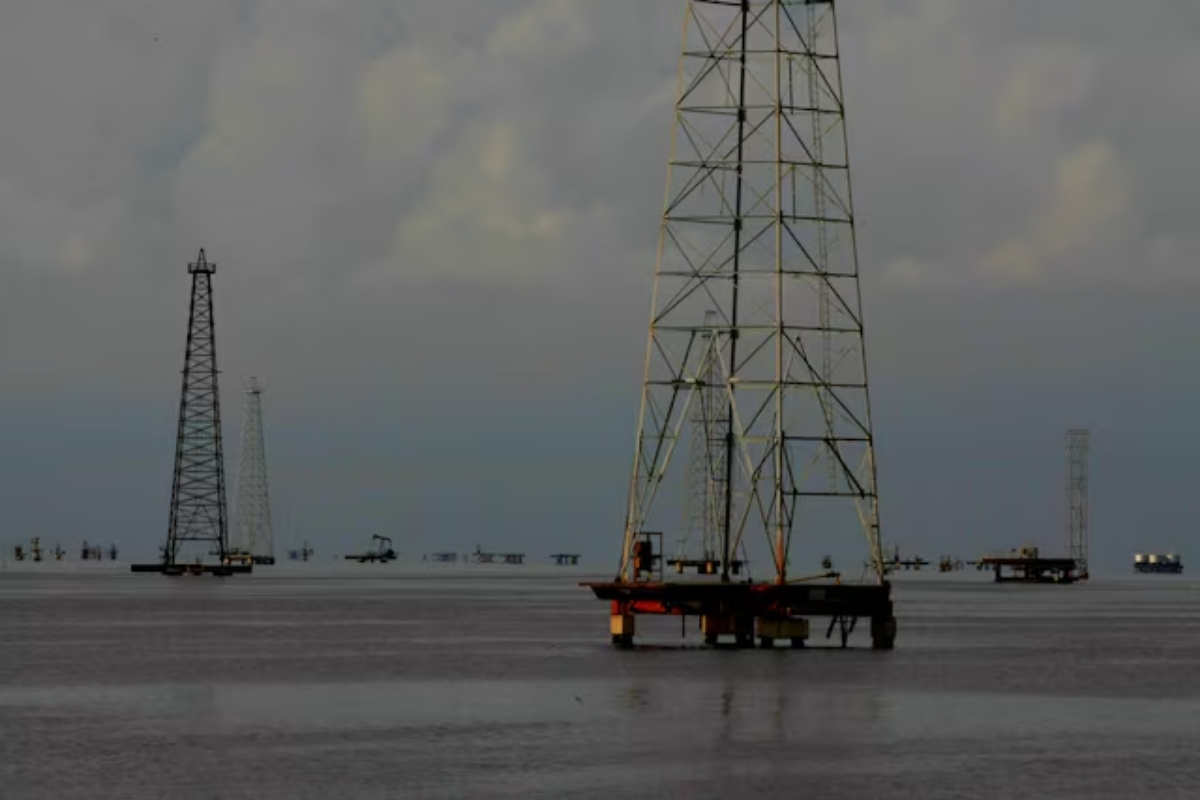
US Energy Secretary Projects Venezuelan Oil Sales to Exceed $10 Billion Annually Opposition Opposition outlets describe the projected 10-billion-dollar annual oil revenue under US-managed sales as a constrained but necessary lifeline that can fund reconstruction, support a freer press, and incentivize democratic reforms if tightly monitored. They emphasize the indefinite nature of Washington’s control and the need for strict external safeguards to prevent the Maduro government from capturing or misusing the new income. @dgj2…hzme @htcq…4692 US Energy Secretary Chris Wright is quoted projecting that Venezuelan crude oil sales managed under US oversight will exceed 10 billion dollars per year, based on already executed and newly signed contracts totaling around 6 billion and further expected volumes. Coverage notes that Venezuela currently produces under one million barrels of oil per day but could add several hundred thousand barrels daily by year’s end, with Wright estimating that Venezuela might contribute between 30 and 40 percent of the global increase in crude supply this year. Reports agree that the arrangement is structured so that revenues from these sales will flow into mechanisms tied to reconstruction and economic stabilization, and that US refineries and related industries, such as asphalt production and road-building, will gain from increased access to Venezuelan heavy crude.
Shared context across the cited reports emphasizes that Washington’s management of these oil sales is framed as temporary but open-ended, with no fixed end date publicly defined, and is linked to broader political, economic, and humanitarian considerations in Venezuela. The accounts reference positive political signals such as the release of political prisoners and the return of previously frozen funds to Venezuela as part of a wider process meant to foster institutional rebuilding, freer media, and movement toward a more representative government. All agree that US geopolitical interests, energy security concerns, and the goal of stabilizing Venezuela’s collapsing economy and mass emigration crisis form the backdrop to this projected expansion of oil exports and associated revenues.
Points of Contention
Nature of US control. Opposition-aligned sources tend to stress that Washington will control Venezuelan crude sales for an indefinite period, casting this as an external management regime that Caracas has little leverage to shape and warning it could become a long-term instrument of pressure. Government-aligned outlets are more likely to frame the same structures as cooperative oversight or technical assistance arrangements, emphasizing joint committees, sovereign decision-making in Caracas, and the idea that any monitoring is transitional and negotiated. Both sides acknowledge US involvement, but Opposition coverage foregrounds asymmetry and conditionality, while Government-aligned narratives highlight partnership and gradual normalization.
Use of oil revenues. Opposition reporting focuses on the promise that more than 10 billion dollars in annual oil income will be channeled into reconstruction, a freer press, and a more representative political system, implicitly suggesting that current state management has failed and must be externally constrained. Government-aligned outlets would instead spotlight the national government’s role in directing these funds to social programs, infrastructure, and economic recovery, portraying oil income as a sovereign tool to strengthen existing institutions rather than to transform them under outside guidance. Where Opposition media stress safeguards, trust funds, and earmarking to prevent political misuse, Government-aligned narratives stress flexibility for the state to prioritize spending without what they portray as politically motivated conditions.
Political conditionality and reforms. Opposition sources highlight the linkage between oil sales, sanctions relief, and political steps such as freeing prisoners and allowing the return of blocked assets, framing these as necessary concessions from a previously repressive government and as benchmarks for deeper democratic reform. Government-aligned coverage would likely argue that such moves are sovereign initiatives taken by Caracas in good faith, and characterize external conditionality as intrusive or as an unfair attempt to leverage the country’s resources for political change. The Opposition narrative thus treats the energy deal as leverage to push liberalization and electoral guarantees, while Government-aligned outlets would present it as recognition of the government’s legitimacy and gradual reform path on its own terms.
Geopolitical framing. Opposition media generally underline Washington’s strategic interest in reducing dependence on other suppliers, stabilizing global markets, and curbing migration by rebuilding Venezuela’s economy, suggesting that alignment with US demands is a pragmatic path out of isolation. Government-aligned outlets are more inclined to embed the same oil projections in a multipolar narrative, stressing diversification of partnerships, national dignity, and the idea that the US needs Venezuelan crude as much as Venezuela needs access to markets. Thus, Opposition coverage often portrays the deal as a necessary re-engagement under Western rules, whereas Government-aligned narratives would emphasize bargaining power and the prospects for a more balanced relationship among several global actors.
In summary, Opposition coverage tends to depict the projected 10-billion-dollar oil windfall as an opportunity tightly bound to external oversight, democratic reforms, and safeguards against government misuse, while Government-aligned coverage tends to frame the same projections as a sovereign victory that strengthens the existing state, dilutes external conditionality, and underscores Venezuela’s leverage in a changing geopolitical and energy landscape. Story coverage
Write a comment