The Cost of Borrowed Maps
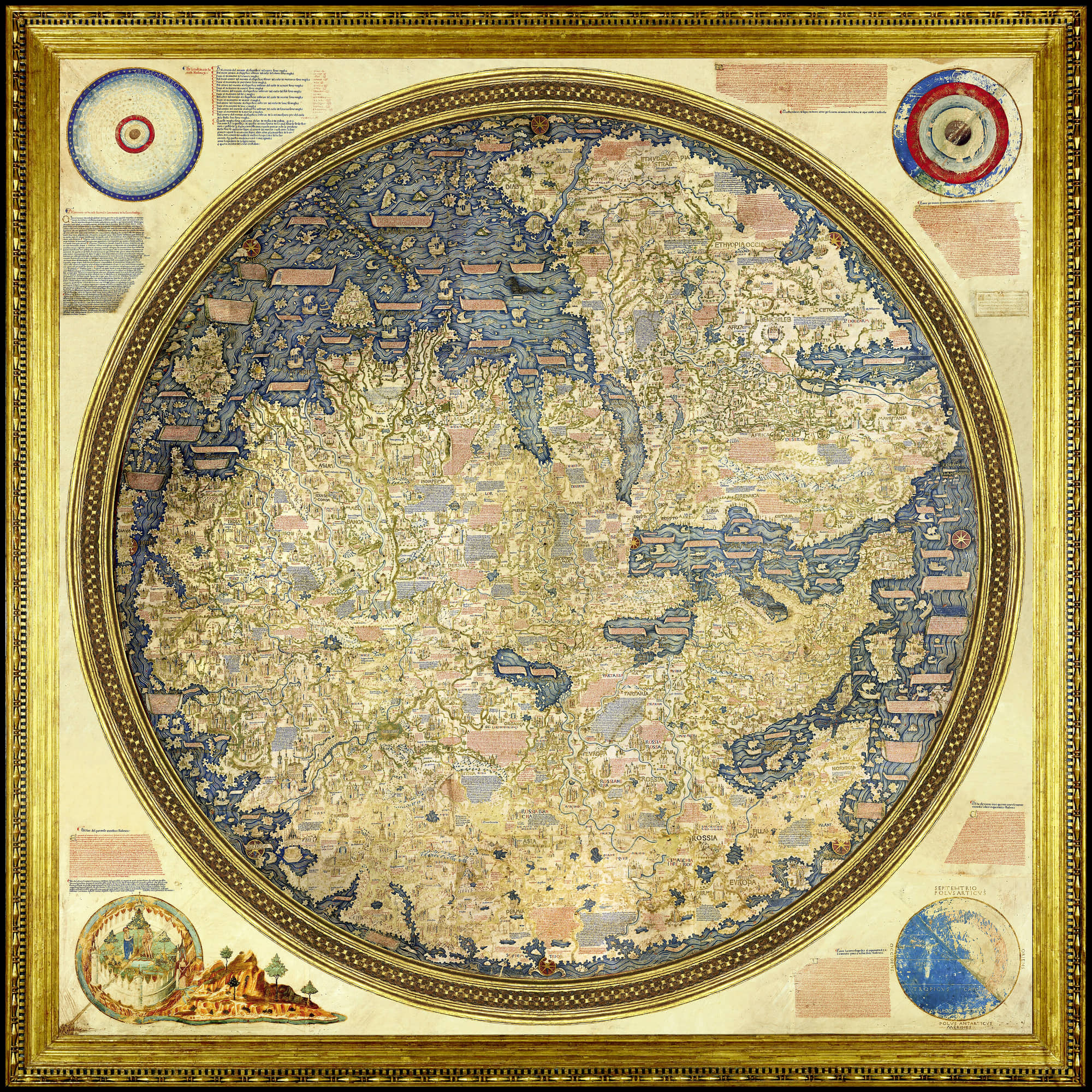
When you ask Google for directions, the request leaving your phone carries a timestamped record that pairs your current coordinates with your intended coordinates, attached to an account that already knows your phone number, your home, your work, your contacts, and the pattern of your previous trips. The route itself is the smaller half of the leak. The richer half is the intent: you have just told a third party where you will be and roughly when. Last Tuesday’s trip to the clinic, tonight’s drive to a lawyer’s office, every trip you would prefer to keep out of a permanent index of your life: each one sits in a row of a database you do not own and cannot delete. Multiply that by every trip you take, store it next to every other person’s trips for the rest of your life, and you have a panopticon of physical movement that the surveillance states of the twentieth century could only have dreamed of funding.
The economics here are blunt. Google gives away maps as a loss leader for a behavioral product. The map is the bait and the dossier is the catch, paid in continuous disclosure of where you go and why. Once collected, the dossier becomes inventory: sold to advertisers who want to know where buyers go, sold to insurers who price you by how you drive, served on subpoena to law enforcement, and exposed in whatever breach happens to land next. The cost is a long-running, queryable archive of where your body has been, who you went to see, and where you are headed right this minute.
The strange part is that the round-trip is trivially avoidable. Route calculation is graph search over a road network, and the road network itself is a finite, slow-changing dataset. The shortest path from A to B is a function of two coordinates and a graph; it requires neither a remote oracle nor a live connection to a sales pipeline. We accept the round-trip because someone built the convenient app that way, and habit took over.
OpenStreetMap is the obvious starting point for an alternative. It is a community-built, openly licensed dataset of the world’s roads, maintained by millions of contributors who survey the places they map. The dataset is free to use and free to fork. It is a public good produced by the people who live on those roads.
Once the dataset is public, the question of where to compute the route becomes a choice the user makes, free of any constraint set by Google. Organic Maps is the application that takes the choice seriously. It is a free and open-source Android and iOS app, built on OSM data, with zero ads, zero tracking, zero account, zero phoning home. You download the countries or regions you care about once, and from then on the app routes, searches, and navigates entirely on the device. The Exodus Privacy project has verified the absence of trackers in the Android build, and the application’s permissions list reads as boring as a privacy-respecting app’s permissions should read.
The storage cost is small enough that the old “but the world will fill up my phone” excuse has retired. Country files typically run from tens of megabytes for small nations to a few hundred megabytes for large ones, and even sizable countries fit comfortably under a gigabyte. A traveler who downloads their home country plus the places on their itinerary ends up using a tiny fraction of a modern phone’s storage, with zero ongoing data transfer. Throw away the SIM card if you want; the navigation works the same.
What you get in return for that small disk cost is a different kind of computation. The route is calculated on the device, by code you can read, over data the world maintains. Every byte of the trip stays on the handset. The logged query that says “this person, at this time, asked for the path from this clinic to this address” never gets written, because there is no server to write it. Your behavioral profile gains no new row. The map is yours in the way a paper map was yours, except that it routes, searches, and updates.
Consider the driver whose auto insurer offers a discount in exchange for installing a “driving behavior” app, and consider the same insurer five years from now, when location histories have been aggregated, brokered, and resold often enough that the discount is no longer optional and the premium is silently priced from your movement pattern whether you installed the app or not. The data does not have to be sold to be used against you; it has to exist. Every Google Maps query you make today is a deposit into that future pricing model. The bank does not need your permission to lend out what you have already given it.
The switching cost is genuinely small. Install Organic Maps from Zapstore, open the app, tap into the download dialog, and pick the country you live in plus any country you are about to travel to. Install GeoShare from Zapstore alongside it; that small companion app intercepts incoming map share links and resolves them into geo: coordinates that go straight to Organic Maps. When the link already contains coordinates in plain form, the resolution happens on your device with no network call at all. When the link is a shortened redirect that hides the destination, GeoShare asks before connecting and, when you allow it, fetches the redirect through a sandboxed web view with cookies disabled or through an upstream open-source relay. Either way, the map service sees an anonymous request for a single URL, detached from your Google identity and stripped of the cookies that tie ordinary traffic to a profile. After that, the typical interaction matches the proprietary app you were using: type a place, get directions, follow the voice. The difference lives in what stops happening. Queries that used to leave the phone now resolve on the device itself, accounts stay uninvolved, and behavioral profiles stop gaining new rows from your travel.
Borrowed maps were always rented. The rent was paid in advance, in a currency the lender chose. Owning your own copy of the world’s roads, and routing across that copy on hardware you control, is the cheapest defense against the most invasive form of surveillance the average person experiences. The habit of asking Google for directions is the last thing standing between the average phone and a navigation stack that owes nothing to anyone but its owner.
Write a comment