A Bold Satellite Rescue Mission Came Together in Record Time, But Will It Work?
“I consider this a success already, just from the fact that we’re even going to try this.”
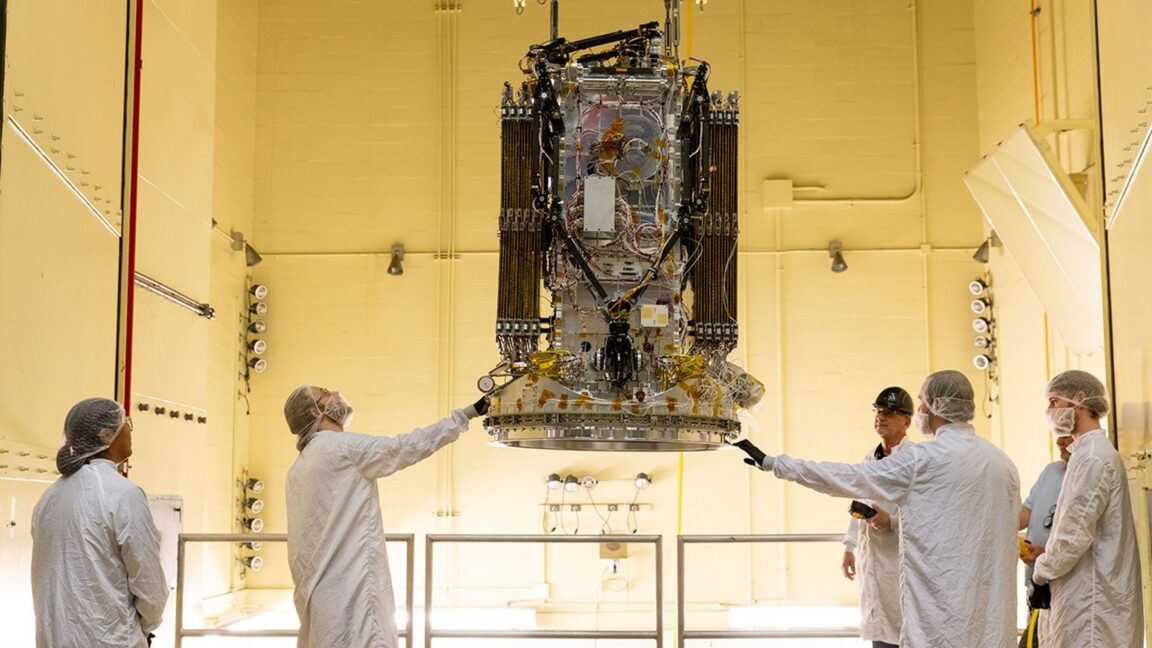
A Bold Satellite Rescue Mission Came Together in Record Time, But Will It Work? NASA awarded Katalyst Space Technologies a contract to build and launch a satellite capable of saving the Swift observatory, which is losing altitude due to atmospheric drag and an active Sun. Katalyst completed the Link servicing spacecraft and integrated it with a Pegasus XL rocket for a launch scheduled for June 27. This mission represents a new template for responsive space missions, developed through an accelerated process that bypassed traditional bureaucratic steps.
- NASA is attempting to save the Swift observatory, launched in 2004, which is at risk of burning up during reentry due to its decaying orbit.
- Katalyst Space Technologies was awarded a $30 million contract to build, test, and launch a small satellite called Link to boost Swift’s orbit.
- The Link satellite, equipped with robotic arms, was built, tested, and prepared for launch in less than a year, an unprecedented timeline for such a complex mission.
- The mission is launching on Northrop Grumman’s final Pegasus XL rocket, chosen for its mobility to reach Swift’s specific orbit.
- The accelerated timeline was achieved by bypassing standard NASA solicitation processes and by Katalyst leveraging existing technology development and accepting higher risk.
- The launch is scheduled for June 27 from the Marshall Islands.
- This effort is seen as a blueprint for commercial and government partnerships in responsive space missions. Continue reading https://arstechnica.com/space/2026/06/a-bold-satellite-rescue-mission-came-together-in-record-time-but-will-it-work/
Write a comment