Caught on video: Colombian tribes go to battle with 'stones and sticks' over historic dispute
A historic battle is taking place in Southwest Colombia involving two native tribes that date back hundreds of years.The conflict has caught eyes around the world for its use of "traditional" weapons among the groups, which included people hurling stones before escalating to more deadly means.'Differences should not be resolved through confrontations.'While there is no consensus on the pre-Hispanic history of the Misak, the tribe of around 21,000 is in a dispute with the Nasa peoples, who also existed before Spanish arrivals and now are believed to have a population of around 240,000.According to Colombian magazine Revista Sur, members of the Guambía Indigenous Reservation (Misak) and the Pitayó Reservation (Nasa) went to battle for several days over the ownership of an 800-hectare area in Silvia, Colombia, about 10 hours south of Medellin.The Misaks reportedly believe the land should be theirs by ancestral right and have accused the Nasa of illegally occupying the land for three months.Videos of the tribal warfare have surfaced online, with one pointing out the use of "traditional weapons" garnering millions of views.Outlet El Pais also noted that the conflict escalated from what originally consisted of people "using stones and sticks."RELATED: Rep. Anna Paulina Luna to file charges against Code Pink co-founder after alleged 'assault' — and there's video Soon, the clashes escalated to machetes, firearms, and even explosive devices, according to El Tiempo. Motorcycles and homes were also torched, with Colombian military eventually sent to calm the dispute.However, AA has since reported six people are dead and more than 100 have been injured in the clash. The region has reportedly been plagued with illegal drug production and past territorial disputes, which have sometimes included forcible detainments of individuals by opposing groups.Despite what the Misak have claimed, the National Land Authority has sided with the Nasa people, saying in March that the Authority knew there would be tension over the decision."There are no 'defeated towns' or 'winning towns,'" the ANT reportedly said. "There are valid colonial titles, formalized reservations, and an institutional duty of the ANT to find solutions that respect agrarian regulations."RELATED: 4 Republicans vote with Democrats to rebuke Trump on Iran war JOAQUIN SARMIENTO/AFP/Getty Images Although the ANT included in its ruling that any Misak who lived in the area could not be displaced or "dispossessed," 500 of the tribe members have been in the Colombian capital of Bogota since mid-May to complain about the government decision.The Misak people are reportedly seeking guarantees about land they consider to be in their possession. The Ombudsman's Office reportedly called for calm and said that "differences should not be resolved through confrontations."Like Blaze News? Bypass the censors, sign up for our newsletters, and get stories like this direct to your inbox. Sign up here!
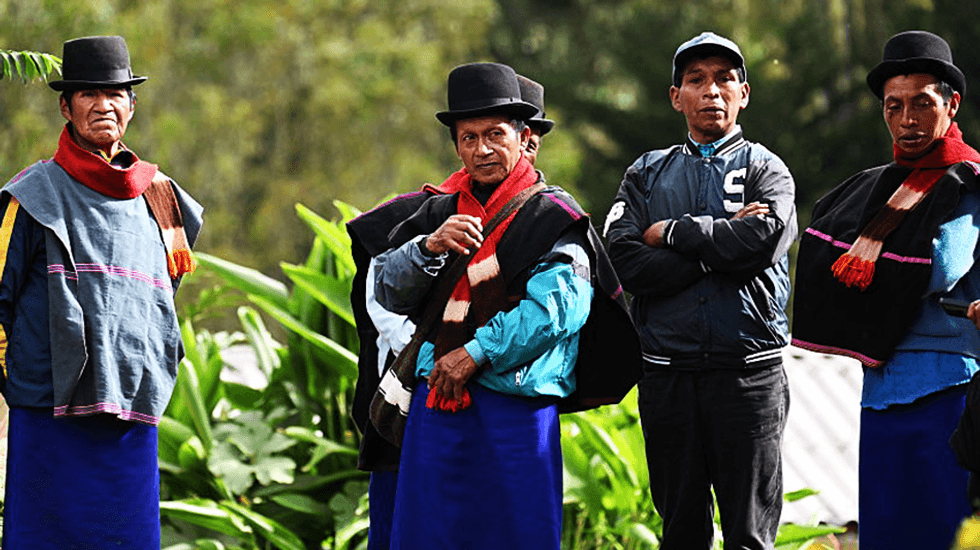
Caught on video: Colombian tribes go to battle with ‘stones and sticks’ over historic dispute A conflict between the Misak and Nasa tribes in Southwest Colombia over 800 hectares of land has resulted in at least six deaths and over 100 injuries. The dispute, which began with stones and sticks, escalated to include machetes, firearms, and explosives. The National Land Authority has sided with the Nasa people, but Misak members are protesting the decision in Bogota.
- The Misak and Nasa tribes are engaged in a violent conflict in Southwest Colombia over 800 hectares of land.
- The dispute escalated from using stones and sticks to employing machetes, firearms, and explosive devices.
- Six people have died and over 100 have been injured in the clashes.
- The National Land Authority ruled in favor of the Nasa people, leading to protests by the Misak tribe.
- The region is reportedly affected by illegal drug production and past territorial disputes.
No comments yet.
Write a comment