Still Life and Society
The protagonist of Brais Lamela's novel What Remains searches in today's New York for the fate of inhabitants of Galician villages that Francisco Franco displaced in the 1950s, forcing them to live elsewhere while realizing his brutal architectural experiment.
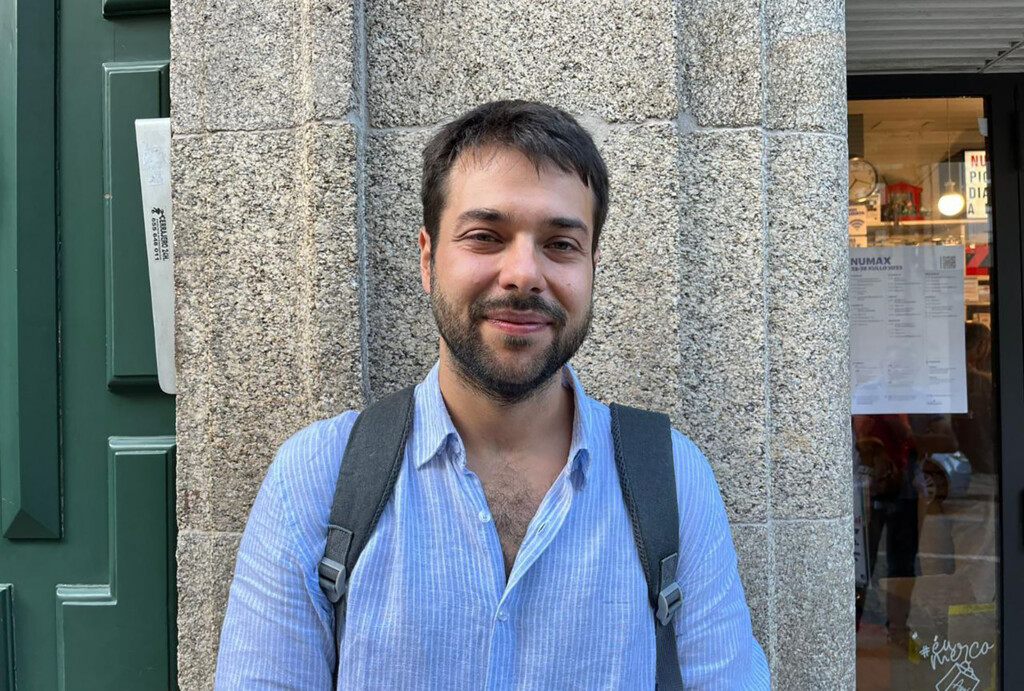
Still Life and Society Brais Lamela’s novel What Remains intertwines a student’s post-graduate life in New York with his research into the forced relocation of Galician villagers under Francisco Franco’s architectural experiment. The narrative explores forensic architecture, memory, and the enduring trauma of displacement, contrasting grand state designs with the intimate realities of human lives.
- The novel What Remains by Brais Lamela follows a student researching the displacement of Galician villagers by Francisco Franco.
- The story connects the protagonist’s life in New York with a historical ‘architectural experiment’ in Galicia.
- Forensic architecture is discussed as a discipline to reconstruct lost places and memories, exemplified by a story from Argentina.
- The article notes that dictators often implement ‘grandiose’ design ideas that lead to the confinement of people.
- The protagonist’s daily life in New York, including his living situation and financial struggles, is presented as a framework for his academic work.
- The displacement in Galicia, caused by the construction of a hydroelectric power plant, led to inhabitants losing old habits and being subjected to surveillance.
- The importance of the kitchen as a political space in a home is highlighted.
- The novel explores the phenomenon of being uprooted and the trauma of displacement, emphasizing memory over forgetting.
- A comparison is drawn to Slavenka Drakulić’s Fables of Communism, specifically the story of Bucharest’s forced urban renewal under Ceaușescu.
Write a comment