SPILF was founded by a reform-era president to showcase the rule of law in Russia. This year’s speakers argued that constitutional rights are the real problem.
The St. Petersburg International Legal Forum (SPILF) took place in St. Petersburg this week for its 14th annual session, running from June 24 to 26. SPILF was established in 2011 at the initiative of Russia’s Justice Ministry, with the backing of Dmitry Medvedev, a trained lawyer who was serving as Russia’s president at the time. In its early years, the event drew a genuinely distinguished international audience. Here is what it looks like today.
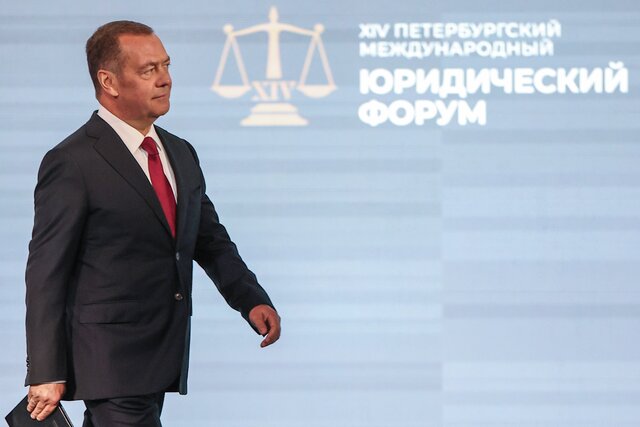
The St. Petersburg International Legal Forum, established in 2011, featured discussions that questioned the primacy of citizens’ rights, with some speakers suggesting a re-evaluation of constitutional principles. Concerns were raised about unregistered cohabitation as a threat to national security and demographic vitality. Speakers also addressed the influence of liberal ideology, the need for clearer duties alongside rights, and the challenges posed by foreign digital influence and artificial intelligence to state sovereignty.
- The 14th annual St. Petersburg International Legal Forum (SPILF) took place from June 24-26, 2026.
- Speakers questioned the approach of prioritizing citizens’ rights and freedoms, suggesting a need for balance with statehood and duties.
- Unregistered cohabitation was identified as a threat to national security and demographic vitality.
- Concerns were raised about liberal ideology, the lack of explicit citizen duties in the constitution, and the potential for foreign influence and separatism online.
- Discussions touched upon historical parallels, the role of collectivism versus ‘sobornost’, abortion rights in relation to the constitution, and the potential of Islamic legal tradition as a source of law.
- The influence of AI and the internet on state sovereignty was also a topic, with accusations against ‘Anglo-Saxons’ and Americans for controlling internet content.
- Dmitry Medvedev called for reparations from Western nations for colonial and neocolonial practices.
Write a comment