Everything Johnny Harris gets WRONG about Mormons
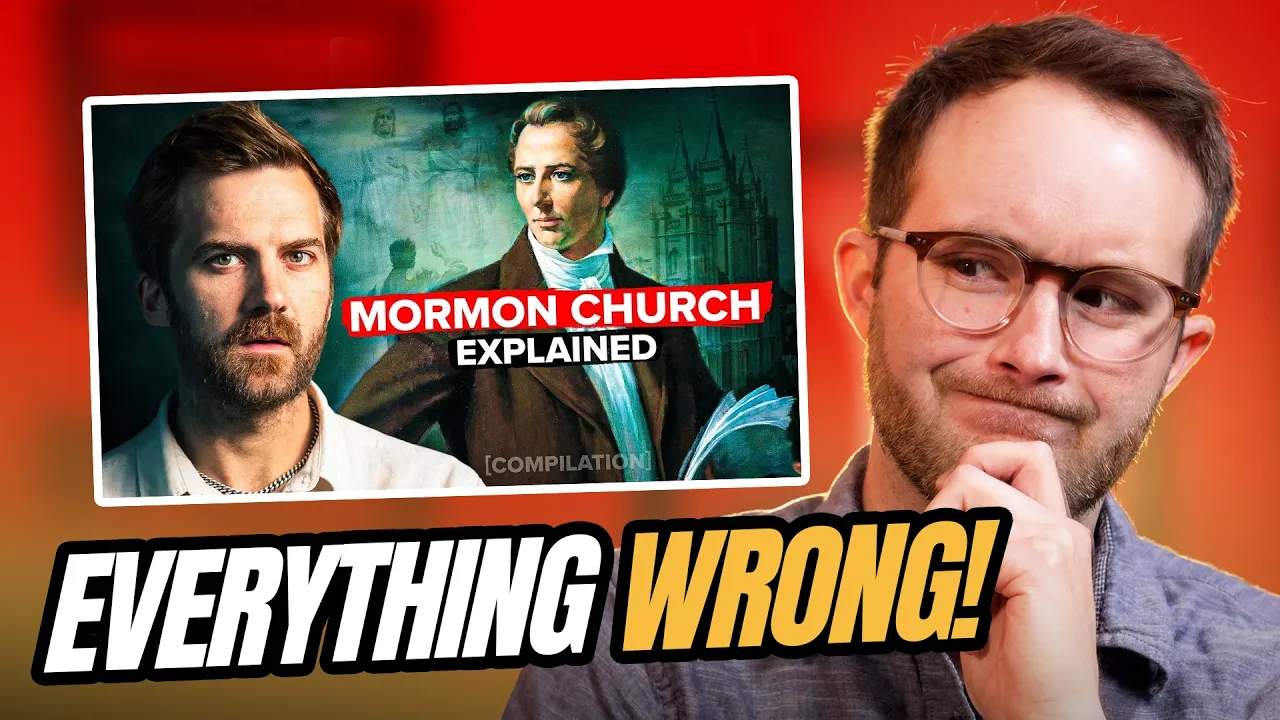
Source: Everything Johnny Harris gets WRONG about Mormons Channel: Keystone Published: May 25, 2026 | Archived: May 25, 2026
Video: Everything Johnny Harris gets WRONG about Mormons
Channel: Keystone
Published: May 25, 2026
Duration: 34:32
Views: 256
Category: Education
Video ID: orqjcDB2v0I
Description
Johnny Harris, a popular YouTuber and former member of the Church, has published a three-part compilation video about the history of The Church of Jesus Christ of Latter-day Saints. We’ve responded to all the related videos separately in the past, but decided to release a compilation of our own – along with some important updates that you won’t want to miss – which highlight everything he leaves out and gets wrong in one place. Let’s dive in.
— More in-depth look at the Mountain Meadows Massacre: Part 1: https://tinyurl.com/3db6cc3c Part 2: https://tinyurl.com/mtsbrwe2 — Video on the Deseret Alphabet: https://tinyurl.com/bddtd48u — Video on relations between Native Americans and Latter-day Saint settlers: https://tinyurl.com/35u38x3y — Video on young brides in Utah: https://youtu.be/CJEGvLQZu0c?si=h-6nGWuMMj9VMmuE — Video on the Joseph Smith “storyteller” theory: https://youtu.be/UXmk7ECJCH0?si=Uqw8rRmkyeHqM4aG
— Video on the translation behind a curtain: https://youtu.be/gp4-VueWqWA?si=H8cSvxWNpHUNdlTa
— “Frontier History and Gender Norms in the United States,” published by Boston University (March, 2023): http://tinyurl.com/5faz2nd9 — “Mapping the Extent of Plural Marriage in St. George, 1861–1880,” by Lowell C. Bennion (BYU Studies): http://tinyurl.com/bdhbyu2k — “Plural Marriage and Families in Early Utah,” via the Church’s website: http://tinyurl.com/ytzpzpjv — “Demographic Limits of Nineteenth-Century Mormon Polygyny,” by Davis Bitton & Val Lambson (BYU Studies): http://tinyurl.com/bddmxk3x — “Polygamous and Monogamous Mormon Women: A Comparison,” by Jessie L. Embry and Lois Kelly: https://tinyurl.com/mrx854es — “Age of Polygamous Wives,” via FAIR: http://tinyurl.com/7vnt679u — “Sealings to Young Brides,” via Brian Hales (JosephSmithsPolygamy.org): http://tinyurl.com/ca3sf4vp — Further reading: — “Frontier Women: ‘Civilizing’ the West? 1840-1880,” by Julie Jeffrey — “Let’s Talk About Polygamy,” by Brittany Chapman Nash — “Teenage: The Creation of Youth Culture,” by Jon Savage — “The Rise and Fall of the American Teenager,” by Thomas Hine — “More Wives Than One: Transformation of the Mormon Marriage System 1840-1910,” by Kathryn M. Daynes
Original Responses: Part 1 (on Saints Unscripted): https://youtu.be/a1WuZu-flZE?si=rUqHGVHpVFGJDJ2h Part 2: https://youtu.be/Zg0Cj83hyuo?si=rM1KnUkb0uyXlThy Part 3: https://youtu.be/Ekeh151c_Ns?si=KgLDAf1XO_izmKi5
Notes:
— “In the mid-1850s, the average age at which women first married was sixteen, but the age rose thereafter as the number of plural marriages declined” Source: “More Wives Than One,” by Kathryn M. Daynes, pg. 212. (I suspect that this stat only applies to Manti, Utah, but someone will have to fact-check me on that.)
— “At most, we can say that the teenager is a social invention, one that took shape during the first half of the twentieth century in response to a society very different from our own.” Hine wrote that “maturity is first and foremost a social phenomenon and only secondarily a biological one.” Source: https://tinyurl.com/3bamm9v3
— “The shortage of women in polygyny forces men to seek younger and younger wives. Women’s average age at marriage is 10 years younger than in monogamy, they are much younger when they first give birth, and they have a wider marital age gap.” Source: https://tinyurl.com/bprtnhmh
— Researcher Lowell Bennion noted, “Only by courting females much younger than they, often teenagers, could men approach the limits of polygamy imposed by demography.” Source: “Mapping Mormonism: An Atlas of Latter-day Saint History,” by Brandon S. Plewe (editor in chief), pg. 124 (this section is written by Lowell C. Bennion).
— “Scholars Paul Bourke and Donald DeBats estimated the median age at first marriage of women living in Washington County, Oregon, in 1860 to be 17.4 years … Romantic love may have characterized eastern middle-class courtship in the nineteenth century, but it remained inaccessible for men and women on the frontier. Reciprocity, rather than romance, was the foundation of a successful rural marriage.” Source: https://tinyurl.com/yrmwxhwh
Facebook: https://www.facebook.com/keystonelds/ Insta: https://www.instagram.com/keystonelds/ Website: https://www.keystonelds.com Apple podcast: https://tinyurl.com/3rx4cw4u Spotify podcast: https://tinyurl.com/33r9f737 Amazon podcast: https://tinyurl.com/5cendacy
Tags
faith and beliefs lds mormon latter day saints jesus christ church saints unscripted david snell faith crisis CES letter mormonism keystone
Transcript — YouTube panel (human-authored)
0:00 Popular YouTuber and former Latter-day Saint Johnny Harris has published three videos about LDS history. We have responded to all three of them. I brought a fruit roll up as a snack, but recently he took his three videos and published them together as one long video. So, we went through our responses and made some important updates. I like Johnny. I think he’s a sincere guy and he’s much more responsible in his videos about our faith than I’ve seen some others be. But there are still quite a few issues that I think are worth addressing. There was this culture of folk magic and legends that led to the search for riches and jewels. And their methods for hunting for all this treasure were mystical and magical. They used sear stones, crystals, rods, and young Joseph Smith was very caught up in this treasure hunting craze. Okay, so I actually love talking about Joseph Smith and treasure digging. Many critics portray Joseph’s treasure digging and this magical worldview as either witchcraft or outright fraudulence.
1:01 Either way you go, it doesn’t look good for Joseph Smith. It’s a great way to sort of poison the well and prime your audience to believe that Joseph was either a liar or deceived. But the reality is that according to the non-Latter-day Saint historian Alan Taylor, treasure hunting was explicitly a form of Christian folk religiosity as practiced in upstate New York and New England. For many rural Yankees, treasure seeking was a materialistic extension of their Christian faith. The folk belief was that if someone buried their money and then died without using it righteously, their spirit was bound to that money until someone found it and put it to good use. They believed that evil spirits would try to prevent them from finding the money. They’d cause it to sink deeper into the ground, etc. But sincere believers felt that they were essentially liberating spirits from purgatory by digging for treasure.
1:54 Another non-Latter-day saint, the anthropologist Manuel Padro, wrote that if this were among the Smith family’s motivations, then we have misread the morality of their involvement in this practice. Mainstream Protestantism at this time wasn’t a big fan of this folk Christianity because it resembled some old Catholic beliefs and practices. So, as Padro found, Protestants condemned these folk Christian practices as demonic and witch craftery. Anyway, I don’t think it was nearly as diabolical as some people make it out to be. Now, Joseph Smith in his 20s, he’s this uneducated, unreligious treasure hunter, and he starts to focus in on something totally new. In the words of one believing Mormon historian, Richard Bushman, he starts to orient himself away from treasure and towards translation. He’s becoming a prophet.
2:48 Okay, so I just want to call attention to the animation style here. It’s kind of uncanny and creepy, almost like he’s a marionette puppet. It it might seem like a little thing to nitpick at, but the lighting and graphics that all contributes to the feel of the video and the feel it creates is that there is something dark or unnatural happening. And as someone who views this story as miraculous and beautiful, I think that’s too bad that they went that route with it. So, Joseph says he goes and gets these plates and people try to rob him, but eventually he gets them secured. And in a little cabin in rural New York, Joseph begins the work of translating this stack of metal plates that no one else is allowed to see. Okay, so initially this is true that people weren’t allowed to see the plates, but I think it’s extremely misleading to not bring up the 11 witnesses here who did see the plates after the translation was complete. Their testimonies can be found
3:41 in literally every copy of the Book of Mormon. And there are also a handful of unofficial witnesses who had amazing experiences with the plates as well. For me, this is probably the biggest problem with this entire video. If it’s just one guy claiming to have these plates that nobody else ever saw, that’d be one thing, but as soon as all these other people are like, “Yeah, I saw them. He showed them to me.” It gets a lot more difficult to shrug off Joseph’s story.
4:08 Johnny completely sidesteps this topic in this video, which is unfortunate, but at the same time, I get it. It’s not easy to explain what they experienced if it wasn’t real. The best explanation that even well-known critics like Fawn Brody and Dan Bogle have come up with was that Joseph Smith somehow hypnotized all of these people, which I think is just kind of wild. Anyway, I’d love to talk about the witnesses for another hour. I think they are a formidable obstacle for those claiming that Joseph was a fraud. It’s a shame they’re not mentioned here. He would sit on one side of a curtain so that no one else could see. And he says he looked through these stones at the Egyptian engravings on these golden plates and they would turn into English and then he would dictate them out loud to a scribe. Sometimes his wife or other early believers who were supporting him and that scribe would write them down. Did Joseph actually dictate the Book of Mormon from behind a curtain? So, I’m going to extend some
5:05 grace here. I understand where this claim is coming from. And we even have church art portraying the translation this way, but when you look at the historical accounts of the translation, I think there’s a different picture being painted. And this is something that Garrett Durkott and Michael Mccay talk about in this book. Long story short, before the translation began, Joseph copied down characters from the plates, probably from behind a curtain, which Martin Harris then took to Charles Anton. Later accounts of the translation of the text we have today, which you can pause and read, indicate that there was no curtain, that Joseph would look at the interpreters or his sear stone in the hat with no access to notes or reference materials and dictate the text in front of whoever happened to be there at the time. So when people say that Joseph dictated from behind a curtain, they’re probably mixing up the time when he was just copying down characters for
5:52 when he was actually translating the text. They’re just mixing up sources there. Now, that doesn’t prove Joseph was a prophet, but it does make it a lot harder for people to claim that he was doing anything suspicious from behind a curtain. Johnny leaves the door wide open for people to make assumptions, but is very likely not accurate. Okay, so let’s be clear on what Joseph Smith said the Book of Mormon is. It’s not what a lot of people say, which is like the Mormon Bible. The foundation of the story is about these brothers of the original family who like eventually split off and they like hate each other and they grow up into these two different civilizations, the Nephites and the Lammonites, who are always fighting with each other and there’s all these prophets and there’s all this drama that happens. And the introduction to my Book of Mormon says the Lammonites, these people came over from Jerusalem, are quote, the principal
6:39 ancestors of the American Indians. And a few years ago, they did change that to the Lammonites being among the ancestors of the American Indians. Okay. So, a while back, I had someone message me about this change in the introduction to the Book of Mormon, and they thought that the introduction was part of the original ancient text that had been translated, which is an understandable misunderstanding. But for the record, no. The introduction was added later to help new readers better understand what the Book of Mormon is about. I think leaders came to understand that the Nephites and the Lammonites were probably not the only civilizations in the Americas at this time. And the Book of Mormon ends with the Nephites extinct and the Lammonites waring with each other. So, I think it was a good move to essentially say, well, we don’t know for sure how big of a slice of the ancestral pie, but they’re in there somewhere. Frankly, I’m grateful to belong to a church that
7:30 is willing to adapt as new light and knowledge comes forth. But yeah, the point is that the Book of Mormon is a history of these Jews turned indigenous Americans. But no, in reality, there’s no archaeological, genetic, or linguistic evidence that supports the Book of Mormon’s assertion that Jewish people migrated to the Americas around 600 BC. Oh boy, there’s so much to say about this, but I’m going to limit myself to two points. One, old world archaeology is a totally different animal from New World archaeology. The desert preserves things very well. The jungle does not. Edwin Barnhart, who’s the director of the Maya Exploration Center, said that less than 1% of Meso America has been professionally surveyed. In 2015, archaeologist William Satno said, “Of all the Maya sites that we know to exist, we have excavated less than 1% of them. The sites themselves that we’ve done excavations at, we’ve excavated less than 10% of 1%. We’re still scratching the surface.” I
8:28 especially love this quote from the director of the Center for Maya Research back in 2013. Truth is, we don’t know squat. With LAR technology, researchers are literally finding entire cities under the jungle canopy that they didn’t know existed. That said, if you look at the brief segment of the Book of Mormon that does occur in the Old World, there’s actually some really captivating finds. The description of Lehi’s journey from Jerusalem to the sea is totally plausible. They mention a site called Nahome. Lo and behold, there is an ancient site called Nahome out there.
8:58 They’ve even found a plausible burial site for Ishmamail. But the New World is different. We don’t know where to start looking, and we don’t know how much evidence would even be left that would be identifiable. I totally understand why a lack of archaeological evidence is a challenge for some people, but I do sometimes think that people might overestimate how much work has actually been done in the New World. Two, I think that when it comes to the Book of Mormon and the miraculous claims in the Bible, I think God wants people to believe because they resonate with the teachings, not because they’re overwhelmed by the academic evidence. I think he wants people to make a choice.
9:35 So, frankly, if the Book of Mormon is true, I don’t necessarily expect to find overwhelming evidence. And the same thing applies to the Bible. This begins the long journey of the Mormons moving west. Joseph and his followers set out. He’s now talking to God directly all of the time. Um, no. We we don’t believe he was talking with God directly all of the time. He was receiving revelations from time to time, but revelations can come in all sorts of different ways. One of our apostles, Elder David A. Bednar, taught that sometimes the spirit of revelation will operate immediately and intensely, other times subtly and gradually, and often so delicately you may not even consciously recognize it.
10:18 Some people portray Joseph Smith’s revelations as if he was having regular brunch appointments with God and taking down dictation. Joseph certainly did experience some striking heavenly visitations, but I think that was more the exception than the rule. This is the same old story of a charismatic visionary man who tells a story of apocalyptic endings to gain followers to gain power and then decides that he deserves a lot of women and then he dies for the cause leaving a movement that continues his vision. Often times those movements get more and more dogmatic.
10:53 They use shame to keep their people close to them and they rever their prophet long after that prophet is dead. And yet, what’s complicated about this is I can’t help but feel a deep sense of sadness for having lost my belief in Joseph’s story. I can’t explain it, but these stories are incredibly comforting when you believe in them. They are motivating. These creative stories, unlike any other belief system, can be really beautiful, and that is a paradox that there’s really no resolution for.
11:28 Okay. So Johnny is absolutely allowed to come to his own conclusions on this. That said, I feel like this is where he starts to stray, especially far from the available historic evidence. We’ve got this 531page book. We can read it and see with our eyes how complex it is. We can analyze the statistically unique literary voices. We can check for contradictions. We can see the intertextuality. And we compare that with the historical evidence available about its coming forth, the speed of the dictation, the lack of notes and reference materials, the witnesses who saw the plates. I take what I know about the Book of Mormon and I put that up against what I know about Joseph Smith and the skills he had. And I see a vast gap between the two that I don’t think can be filled by just saying, “Oh, well, he was a charismatic storyteller.” That might work for some people, but for me that does not answer the questions that I need answered.
12:24 Brigham Y. Young went on to marry 56 wives. He had kids with 16 of them, 57 children in total. Some of these wives were older widows that Brighgam said he married just to take care of them. And some of them were 13 years old. Okay, I wanted to pause and talk about this section for a little bit. He says that some of his wives were 13 years old. Technically, one of them was 13 years old. He kind of implies that there were multiple. There was one that I’m aware of who was Elizabeth Fairchild, who he shows in the video. I wish he would have included this, but I think it’s worthwhile to note that Elizabeth Fairchild was never part of Brigham Y.
13:01 Young’s household. They never had any kids. I don’t know if they were intimate or not at some point in their marriage, but there’s some context for you. She did end up divorcing Brigham young in 1855 after about 10 or 11 years of marriage. But this whole topic of like young brides brings up an important question and and Johnny talks about it a little bit in his video. So we’re going to watch a clip and use that as a launching point. So now that the prophet had openly endorsed it, it was public.
13:25 This was out. More and more Mormon men began practicing polygamy, taking mostly younger women as their extra wives. Okay, we can stop there. So this brings up a good question. Why were women or Latter-day Saint women in early Utah getting married at such young ages? There are a couple factors that play into this. First of all, we need to be careful about presentism or applying today’s standards to past events. The past is a foreign country. They do things differently there. For example, the age of consent nowadays, I think, is between 16 and 18 years old, depending on the state you live in. In the mid 1800s, it was like between 10 to 12 years old, which is shocking, but that’s what it was back then. I think in Delaware, it was like 7 years old, which is ridiculous. Now, I don’t know of any Latter-day Saint women that got married as young as 12 or under, but standards were different back then. Okay, another factor that we need to consider is the fact that sometimes we look at these brides and we’re like, they’re just teenagers. They’re high schoolers,
14:25 right? But uh the whole idea of teenagerhood, the idea that there was a phase between childhood and adulthood, it didn’t exist back then, at least the same way that it does now. Adulthood was more based on physical development than age. So if you were 13 years old, but you could do the work of a mother and you could bear children, then you were considered a woman and marriageable. If a boy was able to do the work of a man, he was considered a man. Our whole concept of childhood and adulthood and teenagerhood has developed a lot over the last 150 years. It wasn’t like that back then. And it would be inappropriate to apply our current understanding of what that looks like or what it should look like on people 150 years ago.
15:07 Another factor that affected the age of marriage was geographically where you lived. Frontier women, women that lived on the frontier were more likely to get married at younger ages to older men. whether you were a Latter-day Saint or not. That’s just the circumstances of the frontier. Those are the statistics coming out of those areas. The other factor is of course polygamy. In a polygamous society, the age of marriage is driven down even more. So, for example, if you’ve got 50 men and 50 women in a community and they marry each other, but the 50 men are still looking for additional wives, the women in their age group, they’re taken. They’re spoken for. So, where do you look? Well, if you look to the older age group, they presumably have the same issue. So, where do you look? you turn to the younger generation where women are just becoming marriageable. So that’s just one of the consequences of a polygamous society plus frontier life plus living in the 1800s. I’m not trying to persuade
15:58 you to be okay with it. I’m just giving you some additional context to explain a little bit at least why the data says what it says and why women were getting married at younger ages to older men at this time in Utah. All right, enough about that. Let’s move on to the next clip. They’re building sugar mills and processing iron and building factories. And they even invented their own writing system, like their own alphabet, which was meant to unify the people around a common way to spell and pronounce words.
16:25 I actually have a reprint here of the Desireette alphabet. They never taught us how to read this, which I’m kind of bummed about because I would love to know what this all says. Pause. I just have to do a brief flex on Johnny here. This is not a reprint. This is an original 1869 Book of Mormon Desireette alphabet reader. It doesn’t contain the whole Book of Mormon, just part of it. But, uh, there is a a key here in the front if you do want to learn how to read it.
16:58 It’s pretty easy to pick up. Just wanted to show how cool I am. History Nerd Flex. Roll the next clip. And what is the state that they proposed? this massive shape. These borders for the proposed Mormon state encompass parts of modern-day Arizona, Southern California, Colorado, Idaho, New Mexico, Oregon, Wyoming, and Utah. This thing is huge. Go big or go home, right? The next clip we’re going to look at is from the chapter called the Utah War. We’re at about 1857, 1858. Let’s watch the clip.
17:30 A group of the Mormon militia happen upon a group of settlers who are traveling to California. They have a standoff and eventually the Mormons end up tricking them into coming out and giving them their guns at which point they go on to massacre almost the entire group. 120 men, women, and children. Okay, so yes, this is a tragic event from Latter-day Saint history known as the Mountain Meadows Massacre. It never should have happened. It’s it’s a horrible thing and it’s a it’s a dark stain on our history. Totally acknowledge that. Tensions were high.
18:00 People were riled up and defensive. I wish that Johnny would have included here that this was not a decision or an order issued by Brigham Y. Young. In fact, the settlers that were dealing with this in southern Utah, this immigrant train coming through, sent word to Brigham Y. Young and said, “Hey, we’re having these problems.” Brigham Young wrote back and said, “Don’t harm them. Let them continue on their way in peace.” But by the time that message arrived, the massacre had already happened. There are a lot of people who try to attribute this whole event to Brigham Young and church leaders when this was something that was decided by local leaders, local militia in southern Utah. I’m not at all surprised that he brought this up in his video. And he’s not wrong, but he’s letting you make some assumptions, I think, about who’s orchestrating this stuff that I wish he he hadn’t done. Cuz I think that when people hear about it, they’re going to assume, “Oh my gosh, these these Mormons, they’re nuts. their leaders had them go off and kill all these people
18:55 and and that’s just not true. Again, this was horrible and an unjustifiable event. But I think it’s also important to recognize that Brigham Y. Young told them not to. So, we’re going to move on now. He says some nice things about Latterday Saint work ethic. And then he says this, “I still don’t fully understand how I could find such meaning and beauty in something that I now find to be so wrong, to be so damaging.” Okay, we’re done there. I am not one to claim that church history is all butterflies and rainbows. I don’t expect it to be butterflies and rainbows. I think that God meets us where we’re at and then helps us to improve. And I think that that’s true on an individual level as well as an institutional level.
19:36 So yes, I see messy history. I’m looking at the same stuff that Johnny’s looking at. But I also see progress and charity and forgiveness. I also see community, love, and truth. There are a lot of things that I believe, but I know that as a member of this faith, I’m closer to Jesus Christ than I otherwise would be. It’s through that lens that I am seeing meaning and beauty and all of these wonderful, powerful things that unfortunately Johnny is is not seeing right now. I left this organization or started leaving it about 10 years ago and I was able to have the courage to do it because it was the first time that I was out of the pipeline. I have spent that decade trying to untangle my feelings of the reality of the harm that was done to my mind from the fact that the church is in me. It is me. It’s hard to encapsulate this in just one clip because it’s not just an incorrect statement or a factual error. It’s a general attitude that permeates a lot of videos I see from former members,
20:44 including Johnny’s. I don’t know. I feel bad even saying this. Maybe it’s just me, but it’s this attitude of, “Man, I used to believe a lot of this stuff, but now that I’ve left the church, I am enlightened. I can now see how indoctrinated I was. If only you were enlightened like I am and knew what I know, you would make the same decisions that I did. But how sad is it that there are still people with their heads in the sand who believe in this stuff. Now, of course, he doesn’t explicitly say that, but that’s the vibe that I often get as he talks about the church. I’m sure that’s somewhat subjective. Not everyone comes off like this, and those who do are probably doing it by accident. But I felt like this video indirectly treats believing Latter-day Saints a bit like zoo animals, a spectacle to be observed rather than real people to be understood, as Johnny is seeking to be understood. Now, it’s a two-way street,
21:38 and sometimes it’s us who come off as the enlightened ones looking down with pity on those who leave. This is something that I think both sides can improve on, myself included. And even while I disagree with a lot of Johnny’s perspective on the church, his video did help me come to a better understanding of what he has gone through, which I think is valuable. As President Nelson taught, “If friends and family should step away from the church, continue to love them. It is not for you to judge another’s choice any more than you deserve to be criticized for staying faithful.” Now, Johnny isn’t the type of creator who gets a lot of factual information flatout wrong. We’ll talk later in this video about a pretty egregious error, but overall he’s trying to get his facts straight. But that said, presentation matters. And what Johnny is really good at is creating an environment that makes you feel the way
22:27 he wants you to feel about a given subject. For example, Johnny starts off his video by taking us on an emotional journey throughout his time growing up as a believing member of the church. I learned songs, rhymes, motions, all teaching me where I came from, why I’m here, where I’m going. I’m sure he’s not lying about his experience. But notice how the music, the animations, and his words, “If I’m worthy, once a month, I get to go to this ornate building,” all combine to create sort of a creepy environment designed to cause you to feel unsettled or like something is deeply off about all of this. I am a child of God.
23:14 Now, I’m not going to say that Johnny’s experience is invalid, but it is just his experience. Though, it sounds like we had pretty similar upbringings in the church. I have come to vastly different conclusions. I deeply appreciate the teachings and the structure the church provides, and I’m here for the long haul. But this does bring us to perhaps the most prevalent theme throughout Johnny’s video. one thing and that thing is control. Control control control.
23:44 Do you kind of see how this works? This control controlled by the messaging of a group of men in Salt Lake City. Over and over again, he emphasizes this idea that church leaders are just trying to control you, your identity, your time, and your money. Now, this isn’t a new criticism. In fact, a guy named Corahor made a similar argument back in about 75 BC. When asked why he was attacking the church, he responded, “Because I do not teach the foolish traditions of your fathers, and because I do not teach this people to bind themselves down under the foolish ordinances and performances which are laid down by ancient priests, to usurp power and authority over them, to keep them in ignorance, that they may not lift up their heads, but be brought down according to thy words.” Ye say that this people is a free people. Behold, I say they are in bondage. Frankly, it sounds to me like the same age-old challenge between parents and children.
24:41 Is every rule the parents give going to be ideal? Probably not. For example, when you are a teenager in the church, you are given a little book that is effectively the manual on how you are to behave and dress and look. Now, this is a whole different thing if you were a teenage girl in the church. Your version of the book focused a lot on what you wear, modesty. Shorts and skirts below the knees, no sleeveless tops. One of the early editions of this book tell girls that their clothes should be comfortable and attractive without calling attention to a person’s body.
25:13 Strapless dresses and spaghetti straps are not acceptable either on sundresses or evening dresses. Few girls or women ever look well in backless and strapless dresses. Such styles often make the figure look ungainainely large and show the bony structures of the body. So, I grew up with this same booklet of standards as well. It includes some awesome stuff that was a great protection to me as a teenager.
25:37 There are also some sections that could have been improved. And to be clear, that’s probably exactly why the church doesn’t use this booklet anymore. Instead of spelling out specific dress and grooming rules like older booklets, the current booklet is much more principle-based. Instead of saying, “Don’t date until you’re 16,” it says 16 is a good guideline, but counsel with your parents and leaders. By design, there is a lot more room for personal interpretation than there used to be. I understand and even agree with some of Johnny’s gripes about old standards, but at the same time, I’m grateful to belong to a church that is willing to examine itself and improve over time. I think that’s admirable. And frankly, the new book of principal-based standards doesn’t get enough credit. One of the other major themes or stories that Johnny tells is essentially the corporationifying of the church. This J.
26:30 Ruben Clark moment is so important because it sets a clear, firm direction for the church, a movement towards a more standardized, literal, controlled theology, one that is not overly debated by its members. He emphasizes that early on when the church was small, there was a lot of room for creative theological interpretation. But over time, the church has become more strict and correlated and organized and business-like and of course controlling.
26:56 So that process is actually really fascinating and really normal. Sociologist Max Weber found that in order for movements to survive and grow long after the death of their initial charismatic leader, at some point they’ve got to institutionalize in some way. Charismatic leaders rebel against societal norms or teachings. They go against the grain and spark a revolution. But over time that fire has to be translated into structure, rules and traditions etc. Frankly, things need to get a little more boring or routine.
27:31 What was once revolutionary becomes orthodox. I think that’s what we’ve seen with our church. We see this in the early Christian church after the death of their charismatic leader, Jesus Christ. We see it with George Washington and the birth of the United States of America. It’s all over the place. Another topic Johnny seems to take issue with is the Latter-day Saint temple recommend interview. You’re not allowed to go inside of these temples, these most sacred places that you must go into to go to heaven, unless you have one of these. It’s called a temple recommend.
28:02 You have to get one of these from your local priesthood leader. So, just imagine this. You’re sitting in a room alone with this man who you trust. He’s like a part of your community. He’s like your authority. And he asks me point blank, “Do you have a testimony of the restoration of the gospel of Jesus Christ?” meaning that Joseph Smith restored the one true church. Do you sustain the president of the Church of Jesus Christ of Latter Saints as the prophet, seer, and revelator? Do you follow the teachings of the church in your private and public behavior? Do you support any teaching, practice, or doctrine contrary to the Church of Jesus Christ of Latter-day Saints? Do you keep the Sabbath day holy? You strive to be honest. Are you a full tithe payer?
28:38 That’s a big one. You can’t go in the temple unless you pay. And all of this leads to the final question, which is, are you worthy? If you answer correctly to these 15 questions, you get a temple recommend. If you don’t, then you do not get a temple recommend. You cannot go to the temple. Yes, it’s about teachings and manuals and you know structures. But it is also about affirming your loyalty to the doctrine, to the organization, to the people in charge. So the temple recommend interview questions have changed somewhat over time, and I’m sure they’ll be refined more in the future.
29:09 But I don’t think it’s weird for there to be a standard that people are expected to meet in order to enter the temple. Potential patrons of the ancient Israelite temple were expected to be righteous, speak the truth, do right by their neighbor, and to keep their oaths. 2,000 years ago, there were inscriptions around the temple sanctuary warning that those who were not permitted to enter but did anyway could be killed.
29:34 It’s a bit extreme. I don’t know if that’s literal or figurative, but it’s strong wording. If people want to participate in modern-day temple ordinances, I don’t think it’s unreasonable to verify that they believe in the teachings of the church and are striving to follow them. I mean, if you’re not striving to follow the law of chastity, you probably shouldn’t be going to the temple where you promise to follow the law of chastity. If you reject the law of 10% tithing, you probably shouldn’t be going to the temple where you promise to be willing to live the law of 100% consecration.
30:06 Anyway, shifting gears, Johnny also took some time in his video to talk about the keystone of our religion, the Book of Mormon. Here in the very introduction, the first page of the Book of Mormon, Joseph Smith says that it is the most correct book of any book on earth, and that it is the keystone of our religion. Keystone. What’s a keystone? A keystone is this, the thing that holds an arch.
30:29 The idea is that if this book is not a literal record of Jews who came to America in 600 BC, if Joseph Smith made it up, then this whole thing falls apart. All of the claims fall apart. You must understand how important this book is to the modern Mormon church if we’re going to continue the story. So, to be honest, this is probably the crux of why Johnny and I have come to very different conclusions about the church. Johnny emphasizes just how much weight this keystone carries, but he never actually undermines it. All he essentially says is that there were a lot of non-members and scholars who thought the Book of Mormon was made up, but he doesn’t actually tell us if it’s a fraud, where it came from or how it really came to be. And he doesn’t cover it in his past videos either. He just kind of shrugs it off and moves on. And that’s really where the rubber seems to always meet the road for me. Is the Book of Mormon
31:24 true or not? If it’s not, then how did Joseph Smith create it? And is there actual evidence to support that narrative? Did he have golden plates or not? If he didn’t, then what did the witnesses see, touch, and witness of throughout their lives? What is the alternative explanation that makes sense of the available evidence? Sure, let’s talk about beards at BYU and the strength for youth pamphlet and control, but ultimately, as he rightly points out, the Book of Mormon is the keystone.
31:56 Now, he does say that some faithful Latter-day Saint scholars really started to dig into the Book of Mormon and lost their faith. To support this claim, he provides one quote from BH Roberts. Even some of the church leaders and official historians do analyses of the Book of Mormon and sorrowfully conclude that the evidence points to Joseph Smith as having created all this himself. This is probably the most egregious error in his entire video. The reality is that BH Roberts never lost his faith in the Book of Mormon. This quote is from BH Roberts, but he’s playing the role of devil’s advocate. How do we know this?
32:33 In the midst of doing this study on the Book of Mormon, he sent a letter to President Hebrew J. Grant in the quorum of the twelve apostles precisely about the work he was doing. This is a long quote, but it’s important. He says, “In writing out this report to you of those studies, I have written it from the viewpoint of an open mind, investigating the facts of the Book of Mormon origin and authorship. Let me say once for all so as to avoid what might otherwise call for repeated explanation that what is herein set forth does not represent any conclusions of mine. This report here with submitted is what it purports to be namely a study of Book of Mormon origins for the information of those who ought to know everything about it proteton as well as that which has been produced against it and that which may be produced against it. I am taking the position that our faith is not only unshaken but unshakable in the Book of
33:29 Mormon and therefore we can look without fear upon all that can be said against it. And just for good measure, this was a topic that Steven Smoot and I covered in more depth in our past interview. The public record is absolutely unamiguous that BH Roberts affirmed his faith in the Book of Mormon and Joseph Smith until he dies. The next time somebody quotes BH Roberts and there’s these juicy, you know, damning quotes from BH Roberts, what he’s doing there is he’s laying out the argument that can or could be made and he’s saying we need to address this. It’s not actually reflecting what he himself actually believed about this. Why didn’t Johnny include any of this context? I wish Johnny the best. He does seem like a sincere guy. My heart goes out to him and I hope that he has found a space where he is more comfortable. We agree on a lot. There are some things we disagree on. Guys, if you found this
34:17 response valuable, I highly recommend you also check out our response to what comedian Mark Gagnon had to say about our faith. He actually saw this response video and let me give him some feedback on a later video he did on our faith. Huge respect for him. I’ll see you there.
- Reference: https://www.youtube.com/watch?v=orqjcDB2v0I



Write a comment